As regular CFZ-watchers will know, for some time Corinna has been doing a column for Animals & Men and a regular segment on On The Track... particularly about out-of-place birds and rare vagrants. There seem to be more and more bird stories from all over the world hitting the news these days so, to make room for them all - and to give them all equal and worthy coverage - she has set up this new blog to cover all things feathery and Fortean.
Showing posts with label rare species. Show all posts

Wednesday, 29 November 2017

Iraq steps up efforts to stop smuggling of rare species


Wassim Bassem November 24, 2017
Smuggling rare animal species out of Iraq has become common due to lax enforcement of laws and the country's security situation, but the federal government is making renewed efforts to halt the smuggling.
A falcon perches on a Bedouin hunter's arm during a hunt in a desert south of Samawah, Iraq, Nov. 30, 2007.
Iraq's Ministry of Health and Environment released 20 falcons back into the wild Nov. 17. The falcons had been smuggled earlier in the month to Kuwait, which returned them to Iraq. This incident is but one example of the systematic smuggling of rare birds and animals out of the country, and the authorities are working to better enforce existing laws and adding security measures.
“The lack of surveillance on the vast, open borders as well as the rampant corruption at the ports make such operations both possible and profitable for smugglers and merchants,” an officer in the Iraqi Ministry of Interior told Al-Monitor on condition of anonymity.
Smugglers are encouraged by traders in the Gulf states who pay huge sums of money to purchase rare, ornamental or hunting birds. There's an anecdote circulating that a rare breed of pigeon recently sent bird fanciers in Kuwait into a bidding war, driving the final price for the birds to $33,000.
“Many trade transactions are conducted illegally, away from any environmental or security controls,” Manal al-Muslimawi, a member of the Iraqi parliament's Environment Committee, told Al-Monitor. “The Iraqi laws [are supposed to] protect the environment and its biological diversity, but they are not being enforced."
The falcon incident, Muslimawi said, "is one out of hundreds of smuggling cases of Iraqi birds and rare animals, and the parliamentary committee is aware of that.” She added, “The environmental police in Iraq are not up to the challenge, given the lack of the needed personnel."
Some markets in Baghdad even sell protected species in plain sight.
"Some well-known smugglers are buying rare animal and bird species from the market to selling them through cross-border networks," bird trader Sheikh Ali told Al-Monitor. 
"There is a trader who managed last year to get seven rare and desirable hawks from the desert of Ramadi and [offered to sell them to us] for a good price," which he declined. "I subsequently learned that this trader [sold them] to the Gulf traders,” he added.

Thursday, 16 November 2017

This sanctuary in India houses some of the rarest species of migratory birds in winter


The Keetham Bird Sanctuary is the abode of hundreds of wild animals and birds throughout the year.

November 13, 2017 | UPDATED 18:56 IST

The Keetham Bird Sanctuary is one of the very few places left in North India, where the endangered Siberian Cranes come regularly to nest every year.

Spread in 2.25 sq km, the Keetham lake and its surrounding 7.97 sq km sanctuary area is the abode of hundreds of wild animals and birds throughout the year, but the months of October to February are special, as this is the time when migratory birds from far north come to spend the winters at this lake.

However, this year, the prospects of these birds arriving to the lake anytime soon appear bleak, with the weather in Agra still quite warm and the high pollution levels with increased construction activity around the sanctuary also acting as deterrents for the migratory birds. Midway into November, the lake still awaits the arrival of its annual guests and bird-watchers arriving here to see these rare birds, are getting disappointed.


Thursday, 20 August 2015

Dozens of birds found dead in downtown Tulsa


TULSA, Okla. — 


PHOTO: Birds die in downtown Tulsa photoQuick facts:
Over 200 birds were found dead at 9th and Elgin in downtown Tulsa today.
The purple martins are a rare species protected by state and federal law.
The game warden says that he is looking into whether someone criminally poisoned the birds, because thousands of them nest in trees nearby, but there is also the possibility that last night's rain knocked them out of the trees and was too much for them to bear, causing them to essentially drown on the sidewalk during a downpour.
TU researchers have taken most of the birds away for analysis because it is a rare species.

Dozens of birds were left dead on downtown Tulsa sidewalks due to what is being called a "rare weather phenomenon".
Many of the birds at 9th and Detroit were cleaned up by Wednesday evening. Those who work in the area said they felt like they walked into a horror movie.

Saturday, 25 April 2015

Carmichael mine may push rare bird to extinction, scientists warn Greg Hunt

Scientists say clearing the largest remaining habitat of the black-throated finch to make way for coalmines will have ‘irreversible consequences’


Friday 24 April 2015 06.43 BSTLast modified on Friday 24 April 201508.31 BST
The creation of Australia’s largest mine will have “serious detrimental and irreversible consequences” for the endangered black-throated finch and may even push it to extinction, a recovery team for the species has advised Greg Hunt, the federal environment minister.


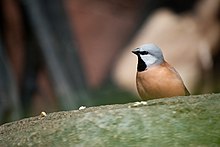
Poephila cincta -Baltimore Aquarium, Baltimore, Maryland, USA-8a.jpgThe black-throated finch recovery team, comprised of scientists from the CSIRO and James Cook University as well as representatives from Townsville council, have written to Hunt and the Queensland government to warn of the impact of the $16.5bn Carmichael mine, set to be situated in the Galilee Basin region.


The letter states that there are only two remaining habitats where significant populations of black-throated finches remain, with the largest of these areas to be cleared to make way for the network of open-cut and underground mines that will make up the 455 sq km Carmichael project.


The clearing of 87 sq km of prime finch habitat will pose a “serious risk” to the future of the species, the recovery team warns, while plans to mitigate the threat are “inadequate”.


Thursday, 12 February 2015

Farmland bird count comes to an end

12 February 2015 Last updated at 11:32

By Claire Marshall
BBC environment correspondent
A major count of farmland birds has concluded with sightings of several rare species.

The farmers participating in the Big Farmland Bird Count recorded seeing 117 bird types, including 14 at-risk species.

These included the linnet, the yellowhammer, starling and lapwing.

The organisers expressed delight with the preliminary results, calling them "remarkable."

More than 2,000 farmers and gamekeepers have been taking part in the survey, which is organised by Game & Wildlife Conservation Trust (GWCT).

Wednesday, 22 October 2014

Studying common birds could help save rare species in Vietnam

Studies in conservation biology often focus on rare, threatened species faced with impending extinction, but what about common animals of least concern? Could they too help conservationists fine-tune their approach? 

Doctoral researcher Laurel Yohe not only claims that they can, but demonstrates how in a new study recently in mongabay.com's open-access journal Tropical Conservation Science. She and five other researchers from universities in the U.S., U.K., and Vietnam compared ranges of five babblers (family Timaliidae) with development across Vietnam. They then used that comparison to predict which areas of the ever-urbanizing country warrant the most protection and which species were hit hardest by past urbanization. 


Tuesday, 30 September 2014

Existence of rare and new species found

Researchers have found the existence of some rare species of birds, Slender Billed Gull and Red Phalarope, and the Jungle Glory butterfly in the country's forest reserves.

Of them, the Jungle Glory butterfly was spotted at Tanchi area of Bandarban hill district when researchers were updating the Red List of Species in Bangladesh for this year.

Prof Monwar Hossain of Jahangirnagar University's zoology department said this particular type of butterfly was last seen in the country some 132 years ago in forests in the Sylhet region.

The findings were unveiled at the 1st preliminary species assessment sharing workshop on updating species Red List of Bangladesh, held at the capital’s Spectra Convention Centre in the capital yesterday.

The Red List estimates the risk of extinction of a certain species which will help to set conservation plans and priority.

Friday, 28 February 2014

RARE SPECIES: Rare songbird faces fire ant threat

By Ella DaviesReporter, BBC Nature

Rain, rats and fire ants threaten the survival of the rare Tahiti monarch, despite a record best year for its conservation.

Just 10 breeding pairs remain in the wild population, which numbers fewer than 50 mature birds in total.
Efforts to save the birds won an award from conservation partnership BirdLife International.

But experts warn that poor weather and predators could dramatically affect the current breeding season.

The Tahiti monarch (Pomarea nigra) is a species of monarch flycatcher that lives in four forested valleys on the island of Tahiti in French Polynesia.

Adults are black with pale blue beaks and juveniles are a red-brown colour.

Populations of the songbirds have declined throughout the 20th Century, but a local conservation programme that has been running for the past 16 years has succeeded in boosting breeding figures.

Sunday, 19 January 2014

Chester Zoo sends an expedition to search for a rare parrot in Ecuador

January 2014: A team of 10 experienced conservationists, bird and horticultural experts, depart this month to survey the remote Cerro Blanco Forest in South West Ecuador, with the aim of tracking down and collecting vital data on the Ecuador Amazon parrot.

Until recently, the Ecuador Amazon parrot was considered to be part of a group and therefore not seen as a conservation priority, but it has been newly recognised as a species in its own right.

Years of research by the zoo’s director general, Dr Mark Pilgrim, has led to its reclassification, and a conservation action-plan is now being put in place.

Wednesday, 8 January 2014

Rim Fire Logging May Endanger Rare Woodpecker

A plan by the U.S. Forest Service to allow "salvage" logging of almost 30,000 acres of forest burned in 2013's Rim Fire poses an unacceptable risk to a rare woodpecker that relies on habitat created by forest fires.

That's according to a new report by the Center For Biological Diversity (CBD) and the John Muir Project (JMP) detailing the importance of fires to the health of Sierra Nevada forests, as well as the animals and plants that call those forests home.

Friday, 3 January 2014

€1.75m spent to protect rare Hen Harrier

Forget about the millions of euro spent on turkeys this Christmas, Ireland's most expensive bird is the rare and protected Hen Harrier.

New figures show that the Government spend on the bird of prey in the 10 months to the end of October this year amounted to €1.75m -- or an average spend of over €5,000 per recorded adult bird.

The most recent national survey recorded between 128 and 172 breeding pairs across the country, giving an estimated total of 344 adult birds.

In response to a Freedom of Information request, the Department of Arts and Heritage confirmed that €1.75m was spent on conservation measures for the bird between January and October 20.

Monday, 30 September 2013

Spotted eagles tracked from Germany on migration to Africa

In order not to disclose the exact breeding sites of rare eagles in Germany, the routes on the map are only shown from the Polish border. Courtesy of NABU

Spotted eagles fitetd with satellite transmitters

September 2013. Twelve Spotted eagles, fitted with GPS transmitters in Germany, are being tracked on their migration to Africa.

Only about 100 pairs of rare Spotted eagles breed in Germany, and this number is declining every year. For years Germany's Nature and Biodiversity Conservation Union (NABU) has been fighting to save the last habitats of this elusive bird of prey; buying the land where they breed and protecting its feeding areas. Nevertheless they are threatened whilst on migration, particularly by hunters, and many young birds die before they mature and return to their German breeding grounds.


To investigate the migratory behaviour, the 30 gram backpack transmitters were mounted on the back of the spotted eagles; they report regularly the exact position, altitude and speed of the eagles.


Tuesday, 17 September 2013

180 rare birds rescued, four held in Kolkata

At least 180 birds of rare species were today recovered during a joint operation here by the police and forest department personnel and four persons were arrested in this connection. 
During the raid, 151 munia birds and 30 of other rare species were recovered from them, they said. 

The four persons, arrested by the police, were trying to traffic the birds from West Bengal to neighbouring states. 

Rs 1.43 lakh was seized from the arrested persons while the birds were handed over to the forest department.

Saturday, 17 August 2013

Huge Owls Need Huge Trees

Aug. 15, 2013 — A study spearheaded by the Wildlife Conservation Society and the University of Minnesota has shown that the world's largest owl -- and one of the rarest -- is also a key indicator of the health of some of the last great primary forests of Russia's Far East.

The study found that Blakiston's fish owl relies on old-growth forests along streams for both breeding and to support healthy populations of their favorite prey: salmon. The large trees provide breeding cavities for the enormous bird, which has a two-meter (six-foot) wingspan. And when these dead, massive trees topple into adjacent streams, they disrupt water flow, forcing the gushing river around, over, and under these new obstacles. The result is stream channel complexity: a combination of deep, slow-moving backwaters and shallow, fast-moving channels that provide important microhabitats critical to salmon in different developmental stages.

The study appears in the August issue of the journal Oryx. Authors include Jonathan Slaght of the Wildlife Conservation Society, R. J. Gutiérrez of the University of Minnesota, and Sergei Surmach of the Institute of Biology and Soils (Russian Academy of Sciences).

The authors studied the foraging and nesting characteristics of Blakiston's fish owl in Primorye, Russia, where they looked at nesting habitat over 20,213 square kilometers (7,804 square miles). They found that large old trees and riparian old-growth forest were the primary distinguishing characteristics of both nest and foraging sites.

Wednesday, 14 August 2013

Welsh Government won’t stop shooting of rare geese

Welsh Ornithologists react angrily to Minister's decision

August 2013. The Welsh Ornithological Society (WOS) have expressed concern at the Welsh Government's decision not to ban the hunting of White-fronted Geese. Wales is now the only area in the Goose's regular haunts where the goose is not protected.

In a consultation earlier this year, WOS set out why Greenland White-fronted Geese should be protected. While WOS acknowledges that long running voluntary bans on shooting are in place at some wetlands, such as the Dyfi estuary, it believes that nothing less than a statutory ban on shooting will ensure its protection. The Society is concerned that any voluntary ban could be lifted at any time and that the voluntary approach does not cover all the sites where these declining geese could spend the winter.

Lolo Williams
WOS President, Iolo Williams, said "There is a very strong scientific case to ban hunting of Greenland White-fronted Geese. Studies on their wintering grounds at Wexford Slobs in Ireland clearly showed that the geese are extremely sensitive to hunting mortality."

Monday, 15 July 2013

Rare buzzards beaten to death by gamekeeper

With four brutal blows, Colin Burne smashes the protected bird of prey until its life ebbs away.

Seconds later, he repeats the outrage, grabbing another trapped buzzard and pummelling the bird to death with a wooden stake.

In a final act of defilement for one of the countryside’s most beautiful creatures, the 64-year-old gamekeeper hurls the lifeless birds into a bucket.

Unknown to Burne, each graphic moment of the 90-second onslaught was being captured by a covert camera set up to watch a bird-trap on land managed by a private shooting syndicate in Whinfell Forest, near Penrith, Cumbria. RSPB investigators had begun the surveillance operation after a tip-off and were left stunned at the brazen way Burne killed the protected birds. When officers from Cumbria Police and the RSPB later searched the site they found the remains of several other buzzards.


Only 70 days jail sentence?  Suspended for a year due to ill-health?  Oh come on.......

Sunday, 14 July 2013

Rare chooks in quarantine face death over single case of salmonella

MORE than 4000 rare chickens held in quarantine at Torrens Island may be killed after one of the birds was found to be infected with salmonella.

The birds, the product of a 10-year breeding program that has cost $500,000, were due to be released in the next few days to a group of about 100 breeders across the nation.

The prospect of a poultry slaughter was triggered by the death of a chick that showed signs of salmonella - the only positive test from hundreds done on the birds including "sentinel" birds specially bred to be susceptible to such diseases.

The federal Department of Agriculture gave the destruction order on Friday.

The Australian Rare Poultry Importation Syndicate is now scrambling to lodge a Supreme Court injunction to prevent the slaughter of the nine-week-old chicks on Tuesday.

Members of the syndicate are conservationists and exhibitors who enjoy the birds as a hobby rather than for food and wanted to replenish the existing gene pool as well as bring new breeds into Australia.

Syndicate spokeswoman Meredith Parker said the group formed a decade ago and had spent about $500,000 on a project to import eggs from 45 different breeds such as Cochins, Dorkings, Scots Greys and Vorwerks.

Friday, 28 June 2013

Black-tailed godwit chicks born at WWT Welney


Black-tailed godwit chicks born at WWT Welney. Courtesy of WWRare wader chicks thrill visitors to WWT Welney Wetland Centre

June 2013. Black-tailed godwit chicks are some of the rarest young birds in the country. These chicks hatched on the Ouse washes at WWT Welney Wetland Centre this spring, and they are the only ones in the whole of Norfolk and amongst just a handful throughout the UK. 

5 pairs of black-tailed godwits at Welney
Up to five pairs of black-tailed godwits have nested at WWT Welney Wetland Centre in recent years. These birds rely on very specific wetland conditions provided by sites like the Ouse washes and Lady Fen.

Steve Wiltshire, Warden for WWT Welney Wetland Centre, says: ‘Providing the ideal habitat for these birds is incredibly challenging, so it is nice to see the hard work of the whole team rewarded. The adult black-tailed godwits are long-legged birds with a long beak and a brick-orange plumage making them quite an attractive-looking bird. The smaller chicks look like little balls of fluff following the parents around'

‘The adults make a distinctive alarm call if a bird of prey like a harrier should fly over, they make this call to make the other bird and chicks aware of the potential danger. This also helps our visitors pin-point where they are.'

Dr Nigel Russell, Lead Conservation Advisor for Natural England, says: ‘News that 3 black-tailed godwit chicks have successfully hatched on the WWT reserve this year is a real fillet to all those concerned with the unique wildlife of the Ouse Washes. Keeping the washes in tip top condition to suit this scarce breeding bird requires long-term, targeted management to an established recipe, management supported by a new, ten year Higher Level Stewardship agreement between WWT and Natural England'

‘Our shared goal is to benefit the specialist wildlife for which this corner of Norfolk is nationally and internationally important, so news that godwits have had breeding success in 2013 marks a very welcome start to the agreement.'

Visitors are able to see these beautiful chicks from the hides with the aid of binoculars or scopes. Binoculars can be hired from the centre, so visitors do not need to worry if they don't have their own. WWT Welney Wetland Centre is open 9.30am - 5pm daily through the summer.

Monday, 27 May 2013

$3K reward offered for killing of rare whooping crane in Red River Parish

NEW ORLEANS — A hunter in northwest Louisiana has shot and killed one of the first whooping cranes brought to Louisiana in an attempt to re-establish the highly endangered species in the state.

State and federal authorities are offering a $3,000 reward for information about whoever killed one of the world’s rarest birds. There are only about 600 alive.

One clue is that a somewhat unusual cartridge was used to shoot the 3-year-old female crane.

Gabe Giffin, a Louisiana Department of Wildlife and Fisheries enforcement division spokesman, says the National Wildlife Forensics Laboratory in Ashland, Ore., analyzed a plastic fragment found in the bullet’s track. He says scientists believe it came from a .264-caliber or 6.5mm bullet with a polymer tip.

“That’s not the only thing we’re hoping on. But we can hopefully get some information on our tip hotline because of that,” he said Monday.

About 412 whooping cranes live in the wild and about 200 in captivity. This one was among 10 released in March 2011, when federal and state authorities began trying to build a self-sustaining flock in southwest Louisiana. Forty have been released in all. Twenty-five are still alive.

“The shooting of this whooping crane is an insult to all law abiding hunters. We ask the public to please share any information that will lead us to the shooter,” said Luis Santiago, U.S. Fish and Wildlife Service special agent in charge for the Southeast Region.

Giffin said the plastic fragment was found during necropsy at the National Wildlife Health Center in Madison, Wis.

Scientists in Madison are still trying to learn the cause of a younger whooper’s death in May, said Robert Love, administrator of Wildlife and Fisheries’ coastal and nongame resources division. That bird was emaciated but apparently died of natural causes, he said. It was in a group of three; when it didn’t move on with the other two, biologists went looking for it.

Based on data from the older bird’s GPS tracker, investigators believe it was shot between April 10 and April 14. The body was found April 16, about two miles northwest of Loggy Bayou in Red River Parish — the spot where the last GPS transmission was made April 14. The last movements tracked were nearby on April 10.


Monday, 26 November 2012

BIRD FOUND DEAD ON BEACH 'SHOT'


A bird found dead on a beach on Kangaroo Island appears to have been shot.

The osprey, a rare species in South Australia, was found by a member of the public on Brownlow Beach, near Kingscote.

Rob Ellis of the South Australian Environment Department said there was a wound consistent with the bird having been fired at.

"It's really distressing because these animals they're rare, so they're declining in South Australia and to actually have a sub-adult killed maliciously is, you know, really quite distressing," he said.

Mr Ellis said osprey numbers were already in decline due to issues such as insecticide use and nest disturbance.

"We're just coming out of the breeding season, so September, October and part of November is the breeding season for these birds. And the sad thing is that if this animal had been involved in a breeding event, the chicks may have been doomed to also perish," he said.