As regular CFZ-watchers will know, for some time Corinna has been doing a column for Animals & Men and a regular segment on On The Track... particularly about out-of-place birds and rare vagrants. There seem to be more and more bird stories from all over the world hitting the news these days so, to make room for them all - and to give them all equal and worthy coverage - she has set up this new blog to cover all things feathery and Fortean.
Showing posts with label New Forest. Show all posts

Thursday, 21 February 2019

Rare sighting of Britain's largest bird of prey in New Forest


30th January
Rare sighting of White-Tailed Eagle in the New Forest
By Bradley Halcrow Junior Reporter
BRITAIN' largest bird of prey has been spotted in the Hampshire countryside.
Birdwatchers have seen  a young white-tailed eagle, a species which has made an appearance only twice in the area in the past decade, in the New Forest.
According to the Hampshire & Isle of Wight Wildlife Trust, the UK’s largest bird of prey was last seen in the county in 2011 and 2008 - and before that there was a 60-year gap.
Also known as a sea eagle it was sighted at the trust’s reserve at Blashford Lakes last month, and again by the Shell Station on the A31 at Picket Post, which overlooks Roe Inclosure.
A Hampshire & Isle of Wight Wildlife Trust spokesperson said: “White-tailed eagles are a rare sighting in Hampshire, with only two previous sightings in the past 11 years.
“They’re an impressive sight to see, being the UK’s largest bird of prey with a wingspan of up to 2.2m (over 7 feet) – but are usually only found in Scotland where 40 pairs breed.

Friday, 7 April 2017

Rare bird facing extinction in southern England following sharp fall in New Forest

Chris Yandell, New Forest Chief Reporter

ALARMING new figures suggest that one of Britain's rarest ground-nesting birds is at risk of extinction in southern England - including its New Forest stronghold.

Experts are warning that the iconic sight and sound of curlews in the Forest could soon be a thing of the past - thanks partly to disturbance caused by walkers, cyclists and dogs.

It follows a survey by Wild New Forest, which provides data to the Forestry Commission, Natural England and New Forest National Park Authority (NPA).

The group found just 40 breeding pairs of curlews across the National Park last year, suggesting a drop of almost two thirds in ten years.

Nationally curlews have declined by 24 per cent over the past 25 years. There are now less than 200 pairs left in the south which, according to experts, makes the New Forest situation even more disturbing.

Now the NPA and other organisations have issued a warning to the public ahead of the curlew nesting season, which starts in April or May.

Nigel Matthews, the NPA's head of recreation, management and learning, told the Daily Echo: "The New Forest curlew population is extremely important – in some ways it’s a barometer for the well-being of wildlife in the area.

"Disturbance is likely to be a cause of the decline and it’s vital we do all we can to reduce instances of birds being startled by people.

"Working with other Forest organisations, we have helped design new signs for use across the open forest this year. The signs make it clear that walkers and their dogs, cyclists and horse riders should all stay on the main tracks when crossing heathland from now until August."

Prof Russell Wynn, a member of Wild New Forest and the NPA, issued a similar plea. 

Saturday, 6 December 2014

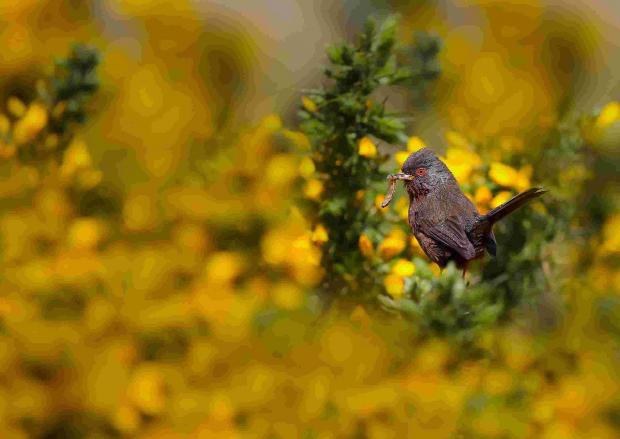
Dartford warbler spotted on New Forest heathland for first time in over a decade

Dartford warbler spotted on New Forest heathland for first time in over a decade

AN ICONIC New Forest bird has been recorded at heathland in New Milton for the first time in more than 10 years.

The rare Dartford warbler, which is on the IUCN Red List of Threatened Species, was spotted at Barton Common for the first time since August 2004 by local expert Keith Betton.

He told the Daily Echo: “It’s always exciting when a rare bird is recorded in a new location.

“The grazed gorse is a good habitat for the birds, and I’m hopeful that in the coming months we will record even more species.

“There are two birds present – so I am hoping they may stay around for the breeding season.”

Thursday, 14 November 2013

Rare mystical bird returns to habitat in New Forest

One of our most mystical native birds, the rare nightjar, appears to be thriving in the New Forest following historic declines in the rest of the UK.

Early results of a survey jointly funded by the New Forest National Park Authority, the Forestry Commission and the New Forest Verderers as part of the New Forest Higher Level Stewardship (HLS) scheme, show the nightjar population appears to be returning to the New Forest.