As regular CFZ-watchers will know, for some time Corinna has been doing a column for Animals & Men and a regular segment on On The Track... particularly about out-of-place birds and rare vagrants. There seem to be more and more bird stories from all over the world hitting the news these days so, to make room for them all - and to give them all equal and worthy coverage - she has set up this new blog to cover all things feathery and Fortean.
Showing posts with label South Africa. Show all posts

Wednesday, 17 July 2019

Refuelling under scrutiny as S.Africa penguins hit by oil spill


JULY 10, 2019

by Max Matavire

Rangers in wet suits have been searching for oil-tarred penguins in shallow water around St Croix Island off the South African coast as a refuelling spill highlights conservationists' fears over pollution.

Experts said an unknown number of penguins had been affected on the rocky, uninhabited island, which is home to the largest breeding colony of endangered African penguins in the world.

A Liberian-flagged ship spewed between 200 and 400 litres of oil into the sea off Port Elizabeth city during "bunkering" re-fuelling—the process of filling a ship with fuel from another vessel.

The small-scale leakage from the bulk carrier MV Chrysanthi vessel at dawn on Saturday was the second oil spill in the environmentally-sensitive area in three years.

"This is exactly the concern with offshore 'bunkering' that we have been voicing concerns about," Stacey Webb, of the Southern African Foundation for the Conservation of Coastal Birds (SANCCOB) charity, told AFP.

"The danger is not over yet. Penguins forage up to 100 kilometres (60 miles) away from the islands (St Croix Island and Bird Island) so they could run into the spill out at sea."


Monday, 10 June 2019

Birds prefer to live in luxury than in poor areas, study finds


MAY 31, 2019
by University of Cape Town
A unique study of birdlife in South African cities has found that birds prefer wealthy areas to poorer ones but will move out if things get too cramped. The study was conducted by a team of scientists from the University of Turin, Italy and the Universities of Cape Town (UCT) and the Witwatersrand, South Africa. Their findings were published this week in the international journal of Global Change Biology.
Co-author on the study, UCT Associate Professor Arjun Amar said: "This work is of particular importance because it is one of the few studies conducted in a developing country, and the only study of its kind in Africa, where urbanisation is predicted to occur at a faster rate than any other region on the planet."


Thursday, 28 March 2019

Local lensman captures rare footage of palm nut vulture


There are only seven breeding pairs and 40 resident birds currently in South Africa.
March 18, 2019
An Impala Park resident can be proud of himself after he snapped rare photos of a palm nut vulture feeding on a raffia palm tree in the park on Wednesday, 6 March.
“There is a pair of vultures that frequent the park every morning and afternoon. The birds have been attracted to the raffia palm tree which was planted by a resident many years ago and have been feeding off the palm nuts,” said Chris Butler. “There is also a juvenile which follows the adults.”
The eagle-eyed lensman snapped the photos at about 5.30pm with a Canon SX60 camera. The sighting of the birds is a rare event, as according to Wikipedia, there are only seven breeding pairs and 40 resident birds currently in South Africa.
The palm nut vulture closely tracks oil or raffia palms, and therefore is most common in coastal forests and mangrove swamps below 1,500 metres, but can also be found in wet savannas.

Sunday, 24 March 2019

Cumbrian seabird spotted in South Africa


9th March

A RARE species of seabird that hatched in Cumbria last year has been photographed in South Africa.
The sighting of the sandwich tern bird delighted staff and volunteers from the RSPB, Natural England and Cumbria Wildlife Trust, who work in partnership with Lancaster University, to conserve these special birds in the county.
The tern in question was ringed at the RSPB Hodbarrow nature reserve in Millom last year as part of a study into their movements.
Several young terns at Hodbarrow and Cumbria Wildlife Trust’s Foulney Island Nature Reserve were ringed during the last breeding season with coded, coloured rings.
This is a scientific method whereby birds are fitted with light-weight, coloured, individual identification rings on their legs that can be read from a distance, to help monitor their movements without the need to re-catch them.

Thursday, 21 February 2019

2,000 baby flamingos rescued after being abandoned in South African drought


The birds are being hand-reared by volunteers as months of dry weather threatens breeding ground
Guardian staff and agencies
Thu 7 Feb 2019 02.49 GMTLast modified on Thu 7 Feb 2019 10.27 GMT
Under warming red light at a rescue centre in Cape Town baby flamingos are fed, weighed and cared for. The chicks are among 2,000 that were rescued after they were abandoned by their parents as dam waters dried up in South Africa.
A special airlift for thousands of baby flamingos is under way in South Africaas drought has put their breeding ground in peril, with a reservoir that hosts one of southern Africa’s largest flamingo populations drying up.
Nicky Stander, rehabilitation manager at the Southern African Foundation for the Conservation of Coastal Birds in Cape Town (SANCCOB), said her team swung into action when news of the abandoned birds broke last month.
 “We rehabilitate, that’s our business, and with the aim of releasing back into the wild. We have very large facilities here that were built last year. And we thought we were the best people to contribute to this project,” said Stander.
“As time goes on and they grow, we are going have to adapt the way that we house them and make sure that they have long running space so they can exercise their legs.”
South Africa has faced an extended period of severe drought, with the government announcing “day zero” – a moment when dam levels would be so low that they would turn off the taps in Cape Town and send people to communal water collection points.
This apocalyptic notion prompted water stockpiling and panic, but also led to a dramatic reduction in per capita water usage and day zero was eventually averted. But the impacts of the drought are still being felt.

Wednesday, 11 July 2018

Love birds: Two penguins take a romantic stroll on the beach hand-in-hand (VIDEO)


Published time: 4 Jul, 2018 12:13Edited time: 5 Jul, 2018 10:26

A video of two lovebird penguins enjoying a hand-in-hand stroll on the beach has gone viral and people are completely overwhelmed by the romance.

The footage was captured on Boulder Beach in South Africa and shows an adorable couple emerging from a dip in the sea. They stand in the wet sand and take a few seconds to enjoy the moment together.

The pair hold hands, or flippers, and appear to gaze into each other’s eyes. The video was shared on Twitter and has been watched more than 1.6 million times.


Friday, 25 May 2018

Africa's Most Endangered Parrot Fighting for Survival


There are fewer than 2,000 Cape parrots left in South Africa's southern mistbelt forests.

PUBLISHED MAY 11, 2018

HOGSBACK, SOUTH AFRICA 

South Africa’s Hogsback State Forest is a magical preserve of dewy ferns and giant trees covered in a fuzzy lichen called old man’s beard. Rumor has it that the region’s mist-wreathed hills and plunging waterfalls inspired the literary imagination of J.R.R. Tolkien, the South African-born author of the Lord of the Rings trilogy.

Hogsback is a haven for yellowwoods, South Africa’s national tree. Logging companies favor the tall evergreen for furniture, and since the late 1800s they’ve razed 60 percent of the country’s yellowwood forests.

The widespread loss of these native trees has had dire consequences for South Africa’s only native parrot, the Cape parrot, which relies on yellowwoods for food and nesting cavities. An often-fatal virus called psittacine beak and feather disease has also taken a toll. The virus’s origins are debated, but research suggests wild parrots may have caught it from captive birds kept in aviaries. (Learn more about the impacts of deforestation.)

Monday, 19 March 2018

South African bird populations have never been in a worse shape


NEWS / 10 MARCH 2018, 6:35PM / SHEREE BEGA

Waning waterbirds, declining raptors, seabirds under pressure and large terrestrial birds running out of space.

This is the alarming new assessment of South Africa's birds, which warns how the country's bird populations have never been in a worse shape.

"South Africa’s bird populations are in trouble," says Martin Taylor, the special projects programme manager at BirdLife South Africa. "The increase in extinction risk faced by our region’s bird species needs to be of concern to all South Africans."

Taylor compiled the State of South Africa's Birds 2018, a landmark report, scheduled to be released next week. 

He explains that the report, the first of its kind, draws on national survey and monitoring data to provide a highly visual snapshot of the conservation status of birds as well as the biomes they reside in. 

The report shows how the conservation status of birds has declined drastically over the past 30 years with 132 species now classified as regionally threatened with the number of critically endangered and endangered bird species increasing significantly since the 2000 assessment.


Tuesday, 20 February 2018

Rewrite the bird books: new breeding site found for one of world's rarest birds

17 Feb 2018

The White-winged Flufftail (Critically Endangered) has just been confirmed to be breeding in South Africa – not only Ethiopia as previously thought – thanks to a discovery by BirdLife South Africa’s hidden camera traps. This sheds new light on the bird’s conservation.

By Jessica Law

Everything we thought we knew about the White-winged Flufftail Sarothrura ayresi has been shaken up by recent footage captured by camera trap technology. At Middelpunt Wetland in South Africa, a site previously thought to cater only to non-breeding visiting Flufftails, strange photos were recorded. They depicted intriguing wing-flapping behavior, with both males and females displaying their white wing feathers. Could it be that something more than feeding was going on? It seemed almost too good to be true. But later, the ultimate proof appeared – the unmistakable image of a rotund, speckled juvenile scuttling through the undergrowth. This new knowledge changes everything.


Friday, 12 January 2018

The ultimate irony: Cape Gannets, famed for their greed, are now starving

12 Dec 2017

The word “gannet” is synonymous with gluttony - but lack of food is becoming a serious problem for the Cape Gannet. This year it has been uplisted from Vulnerable to Endangered due to population declines driven by depleted fish stocks.

The Afrikaans name for the Cape Gannet Morus capensis is “Malgas”, meaning “mad goose”. This makes sense when you see this large seabird on the ground. Their ungainly waddle, coupled with the difficulty they have in taking off when there isn’t any wind, does appear quite comical. But at sea and they are different birds entirely. When feeding, they plunge into the water like arrows, to depths of up to 20 metres.

But these seabirds, endemic to South Africa and Namibia, have recently been uplisted by BirdLife from Vulnerable to Endangered on the IUCN Red List.


Sunday, 22 October 2017

Extinction worry for Africa’s largest eagle species


NEWS / 9 OCTOBER 2017, 10:04PM / STAFF WRITER

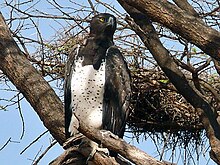
Polemaetus bellicosus -Masai Mara-8.jpgThe population of Africa’s largest eagle species is in freefall in South Africa and may be edging towards extinction, according to a new UCT study.

Martial eagle sightings have dropped by as much as 60% since the late 1980s, in stark contrast to human population growth across their shared natural habitat, the study published this week in the scientific journal Bird Conservation International found.

Although the exact reasons for the decline remains unclear, researchers say their findings point to an urgent need to better understand the threats to the bird.

The study also highlighted a decline in Martial eagle sightings within protected areas, including the Kruger National Park and the Kalahari Gemsbok National Park.

However, declining numbers of the species in protected areas were not as severe as elsewhere, suggesting that these areas could act to limit the factors leading to the sharp decline.

Dr Arjun Amar and PhD student Danië* Cloete from UCT’s FitzPatrick Institute of African Ornithology conducted the study using two Southern African Bird Atlas Project surveys carried out 20 years apart. 

Their previous research showed that comparing these surveys provided an accurate way of measuring changes in the population size of this species.

Martial eagle total population figures are still relatively inexact, but their conservation status was uplisted in 2013 from Near Threatened to Vulnerable - which means they are recognised to be globally threatened.


Friday, 24 March 2017

Net entanglements now a major problem for South African seabirds


Despite huge success in reducing the incidental catch of seabirds in fishing nets, there’s been reports that an old type of vessel used in South Africa is still posing serious threats to seabirds. 

The Albatross Task Force (ATF) has been highly successful in achieving a remarkable reduction in the incidental catch of seabirds in the South African hake trawl fishing industry through the introduction of bird-scaring lines; a simple and affordable solution. These lines act as visual deterrents to prevent cable strikes. 

Despite these overwhelming achievements, there is a vessel class of side trawlers which is still posing a serious threat to seabirds. The side trawlers are some of the oldest vessels in South Africa’s demersal trawl fishery. These vessels haul catch over the side, rather than over the stern. The nets are also deployed over the side with the trawl warps passing through two blocks suspended at the stern. Hence trawl dragging is actively done from the stern. 

Net entanglement is a major problem when the net stays loose on the sea surface for longer periods, for example during hauling and setting. Diving birds, mainly Cape Gannets can become trapped in the mesh of the net. Side trawlers are of special concern many because of the hauling process where loose net floats for a longer period compared to that of stern trawlers. 

Evidence of this interaction by South African vessel, was captured on camera by our former Albatross Task Force leader Barry Watkins on one of his trips however we do yet have a clear idea of the magnitude of the issue in South Africa. 

Currently there are no particularly successful mitigation measures to reduce the risk of seabirds becoming entangled in these nets. The current best practice advice suggested by ACAP (Agreement on the Conservation of Albatrosses and Petrels) is aimed at reducing the attractiveness of the net to seabirds and limiting the time the net remains of the water surface. 

Monday, 6 February 2017

Researchers investigate decline in South Africa's forest-birds

Date: February 3, 2017 
Source: Stellenbosch University
 
Forest-dwelling bird species are disappearing from some of South Africa's indigenous forests, with forest birds in the Eastern Cape being the most affected.

A new study, published in Bird Conservation International recently, showed that the ranges of 28 of South Africa's 57 forest-dwelling bird species were declining, while those of 22 species were increasing and seven remained stable.

The findings are based on 25 years of citizen science data collected by the Southern African Bird Atlas Project. The data can be used to indicate the conservation status of a species, depending on its known range and how it is changing. The first survey took place from 1987 to 1992, and the second survey started in 2007 and is ongoing.

Researchers from Stellenbosch University (SU) and South Africa's Department of Environmental Affairs used data on 57 forest-dwelling species to investigate links between deforestation, species characteristics and range declines for these species over the last 20 years.


Continued

Tuesday, 15 March 2016

Ostrich chases after cyclists in South Africa


Headcam footage shows an ostrich running after a group of cyclists travelling towards the Cape of Good Hope in South Africa


By Charlotte Krol, video source ViralHog / YouTube / Oleksiy Mishchenko
7:32PM GMT 06 Mar 2016

Is it is a bird, is it a plane? Well, yes, it is a bird: a huge ostrich chasing after a group of cyclists in South Africa.

Headcam footage taken by Oleksiy Mishchenko on Saturday shows the bizarre moment the ostrich appears out of nowhere and follows his training group along a road.

Some may find such an experience terrifying but Mr Mishchenko clearly thinks otherwise, laughing heartily off-camera as the bird runs after his friends.

He said: "The road through the national park is quite and a little deserted. Suddenly I heard a noise on my left and saw a big ostrich in the bush.


Tuesday, 26 May 2015

Bird put down after hit with arrow

May 26 2015 at 08:56am 
By Mercury reporter 

Durban - In the wake of a hadeda’s being horribly injured in a shooting incident involving an arrow, the Kloof and Highway SPCA has urged parents to teach their children to be responsible when using “toys” and not to use innocent animals as targets.

The SPCA’s spokesperson, Lisa Gadd, said that on Friday they received a call from a Kloof resident who had seen an injured hadeda in their garden.

She said inspectors went to the area and found two hadedas, one of which was seriously injured.

“One hadeda flew away as they approached, but the injured bird battled to move and was only able to fly as high as waist height,” he said.

Gadd said the inspectors caught the injured hadeda and took it to the Kloof and Highway SPCA clinic.

“An arrow was protruding from the bird’s torso and had penetrated right through. The arrow measured 75cm in length. Unfortunately the bird could not be saved,” she said.

Friday, 28 November 2014

Conservation app for birders

Durban - A new phone application could change the way bird conservation is carried out – and also help fight poaching.

The app, called Birdlasser, was showcased at the Nurturing Environmental Sustainability Through Technology summit at the Manyoni Bush Camp in Mkuze at the weekend.

The free technology encourages users to log bird sightings they make and enter the information in the app. The data then gets sent to the Animal Demography Unit at the University of Cape Town and becomes available for academics, people doing environmental impact assessments, conservation companies – as well as the public.

The entire process, from the time someone logs the information to being received in Cape Town, takes just three minutes.

The information will also form part of the Southern African Bird Atlasing Project 2, an update of the previous project which was conducted between 1987 and 1991.

The project will help provide an understanding of the changes bird populations have gone through in terms of habitat and population.

Birdlasser creator Henk Nel said: “It started with a vision four years ago on how technology can work towards conservation. I saw birding needed technology. There were apps, but they were not professionally done.”

Wednesday, 15 October 2014

African penguins put researchers in a flap

Controlled fishing experiment raises controversy over cause of birds’ decline on Robben Island.
15 October 2014

Robben Island is notorious as the site where Nelson Mandela spent 18 years in prison, but now the island’s 1,200 breeding pairs of African penguins are sparking a scientific controversy. At stake is the survival of an endangered species, as well as how fisheries around the world are managed.

In 2013, there were just 22,000 breeding pairs of African penguins (Spheniscus demersus) worldwide: the population had declined by 65% since 2001. Possible causes include pollution, habitat loss and climate change, but a key suspect is fishing of anchovies and sardines, which are important prey for penguins.

To test this theory, in 2008, the now-defunct South African Department of Environmental Affairs and Tourism began an unusual experiment involving two pairs of islands: Robben and Dassen islands, off South Africa’s west coast; and St Croix and Bird islands, off the country’s south coast. For three years, a zone around one island in each pair was closed to fishing while the other island remained open. Then the situation was reversed. The rare controlled experiment has “important implications for fisheries worldwide in competition with vertebrate predators”, including seabirds, seals and dolphins, says Johann Augustyn, secretary of the South African Deep-Sea Trawling Industry Association in Cape Town.

Saturday, 3 May 2014

Sly Birds Cleverly 'Cry Wolf' to Steal Food

By Stephanie Pappas, Senior Writer | May 01, 2014 02:00pm ET

The red-eyed, black-feathered fork-tailed drongo is an irrepressible mimic, capable of reproducing the calls of everything from other birds to mongoose-like meerkats. Now, a new study finds that these drongo birds are strategic copycats: They "cry wolf" about potential danger, startling other animals and stealing their food.

What's more, drongos (Dicrurus adsimilis) alter their cries to keep their targets from becoming inured to the trick.

This ability to change up calls when one of the calls isn't working may be an evolutionary way to get around the problem the little boy in Aesop's fable ran into: If you raise the alarm about danger too many times, eventually, no one listens. The problem plagues any animal that uses a deceptive strategy, said study researcher Tom Flower, a behavioral ecologist at the Percy FitzPatrick Institute of African Ornithology.

Sunday, 6 April 2014

BIRD RESCUE: South African penguin chicks saved from starvation

Conservationists save more than 800 endangered chicks from starvation after they are abandoned by their parents


theguardian.com, Thursday 3 April 2014 16.55 BST

More than 800 endangered African penguin chicks have been saved from starvation in South Africa as part of a conservation project led by the Bristol Zoological Society.

Conservationists working on the Chick Bolstering project took chicks from a number of colonies and hand-reared them to ensure their survival. Around 500 were taken into temporary captive care in November and December alone, after being identified as underweight and unwell due to abandonment by their parents during the moulting period at the end of the breeding season.

African penguin colonies are declining at an alarming rate - the present population is only 2.5% of its level 80 years ago. Overfishing and the movement of fish stocks away from the colonies has resulted in a shortage of food. 

Around 150,000 breeding pairs of African penguins were counted in 1956, but last year the total had plummeted to only 19,000 pairs - a loss of nearly 90% in half a century.

For the chicks, abandonment before they are of fledging age is a real danger, with cold weather already causing issues for their survival.