As regular CFZ-watchers will know, for some time Corinna has been doing a column for Animals & Men and a regular segment on On The Track... particularly about out-of-place birds and rare vagrants. There seem to be more and more bird stories from all over the world hitting the news these days so, to make room for them all - and to give them all equal and worthy coverage - she has set up this new blog to cover all things feathery and Fortean.
Showing posts with label swift. Show all posts

Friday, 1 March 2019

Appeal for householders to help save Scotland’s fastest bird


Swift to decline, slow to recover: A conservation charity is seeking good homes for the threatened birds as their nest sites vanish
GEORGE MAIR Published: 06:00 Friday 15 February 2019
A conservation charity has appealed for Scots homeowners and businesses to help save the nation’s fastest flying bird, the swift, by providing thousands of new homes for them.
The iconic summer visitors used to be seen in large numbers swooping across the rooftops in Scotland’s urban areas. Nicknamed devil birds because of their distinctive screams, swifts can reach speeds of up to 70 miles per hour in flight. But the bird is also one of Scotland’s fastest declining, with the population crashing by 59 per cent since 1995.
Now, as swifts prepare to make their epic 6,000 mile journey back to Scotland to bring up their chicks in the coming months, RSPB Scotland says some birds hoping to lay their eggs here will be thwarted because their former homes under the eaves are gone, as are the spaces once left for them. The charity yesterday appealed to people in towns and cities to help the species by providing as many new homes for them as possible.

Friday, 2 June 2017

Chester Zoo conservationists need YOUR help to save this much loved bird species


The structure of new buildings is causing a major threat to the future of the one of nature’s greatest fliers

Carmella de Lucia
06:00, 12 MAY 2017
 

Conservationists from Chester Zoo are calling on the public to help save a bird they say is in rapid decline.

The swift – which can fly non-stop for four years, is one of the UK’s most iconic species, migrating from Africa up through Europe every spring to nest in the UK over summer.
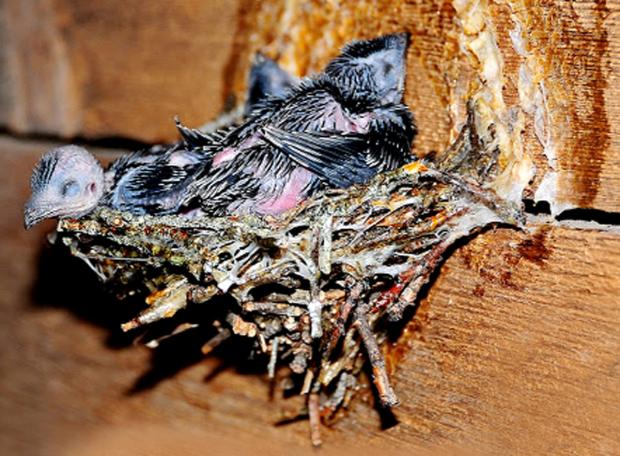
Since Roman times they have nested in eaves and holes in buildings but thanks to improvements to UK buildings in recent decades, they are arriving afetr their long journey to find a lack of nesting sites.

Now the first major swift survey in the Chester area for 20 years is underway and experts are offering tips on how you can lend a helping hand to the British favourite by protecting nest sites and putting up nest boxes.

Conservationists from Chester Zoo’s Wildlife Connections campaign and the Chester RSPB Group have teamed up with Cheshire West and Chester Council, RECORD, Cheshire Wildlife Trust, the Cheshire biological records centre and local experts in a bid to help the bird by turning Chester into a swift friendly city.

Manon Keir, Wildlife Connections project officer at Chester Zoo, said: “The great British summer would not be the same without the sight and sounds of swifts gracing our skies, but we mustn’t take this for granted. Conservation is critical but it is certainly not too late.

Thursday, 14 August 2014

Bird fans in flap over unusual swift rescued in Devizes

6:30am Tuesday 12th August 2014 in News
By Jill Crooks, Devizes area senior reporter


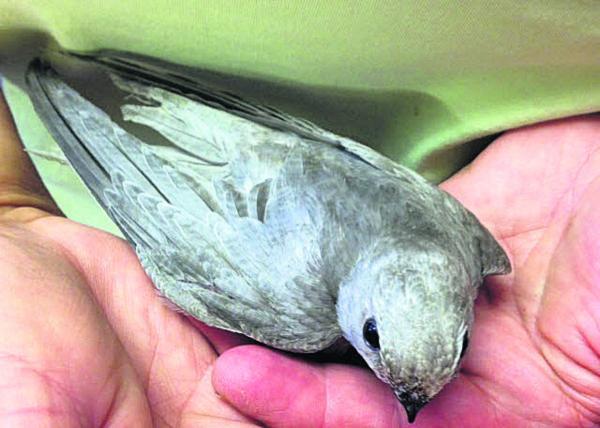
An unusual coloured swift which is being treated at Wiltshire Wildlife Hospital has created interest.

The silver male bird was taken in by the hospital at Newton Tony, near Salisbury Plain, after it was rescued by a woman in Devizes.

The bird was in the gutter of the woman’s house following storms two weeks ago.

After she put a broom up to it, it crawled on.

The young swift, which is just a few weeks old, is thought to have a bruised right shoulder which the hospital has been treating and will be ready to be released soon.

Staff at the hospital have not seen a swift this colour before and wildlife care supervisor Marilyn Boyes Korkis said: “It’s very unusual, whether it’s the only one in England I don’t know. It’s just the most beautiful bird.”

Tuesday, 10 June 2014

Swift action creates hundreds of nests in Ribble Valley

By Jon Robinson, Reporter

HUNDREDS of new nests have been created in the Ribble Valley to house swifts returning to the UK to breed.

The RSPB and Ribble Valley Borough Council have joined forces to provide 200 purpose-built holes in the sides of homes for the birds.

With their long scythe-shaped wings, swifts have just arrived back, having spent the winter eating insects in the central African rainforests.

Swifts in the UK are almost totally dependent on holes in old buildings to raise their chicks, but these days are finding it increasingly hard to find a place to nest.

Thursday, 2 May 2013

Bird fossil sheds light on how swift and hummingbird flight came to be

posted by news on may 1, 2013 - 5:30am

Durham, NC — A tiny bird fossil discovered in Wyoming offers clues to the precursors of swift and hummingbird wings. The fossil is unusual in having exceptionally well-preserved feathers, which allowed the researchers to reconstruct the size and shape of the bird's wings in ways not possible with bones alone.

Researchers spotted the specimen — the nearly complete skeleton of a bird that would have fit in the palm of your hand and weighed less than an ounce — while working at the Field Museum of Natural History in Chicago.

The newly discovered bird was named Eocypselus rowei, in honor of John W. Rowe, Chairman of the Field Museum's Board of Trustees.

First collected in southwestern Wyoming in a fossil site known as the Green River Formation, E. rowei lived roughly 50 million years ago, after the dinosaurs disappeared but before the earliest humans came to be.

E. rowei was a tiny bird – only twelve centimeters from head to tail. Feathers account for more than half of the bird's total wing length.

To find out where the fossil fit in the bird family tree, the researchers compared the specimen to extinct and modern day species. Their analyses suggest that the bird was an evolutionary precursor to the group that includes today's swifts and hummingbirds.

Given the differences in wing shape between these two closely related groups of birds, scientists have puzzled over how swift and hummingbird flight came to be. Finding fossil relatives like this specimen is key to figuring that out, the researchers say.