As regular CFZ-watchers will know, for some time Corinna has been doing a column for Animals & Men and a regular segment on On The Track... particularly about out-of-place birds and rare vagrants. There seem to be more and more bird stories from all over the world hitting the news these days so, to make room for them all - and to give them all equal and worthy coverage - she has set up this new blog to cover all things feathery and Fortean.
Showing posts with label Kent. Show all posts

Wednesday, 26 December 2018

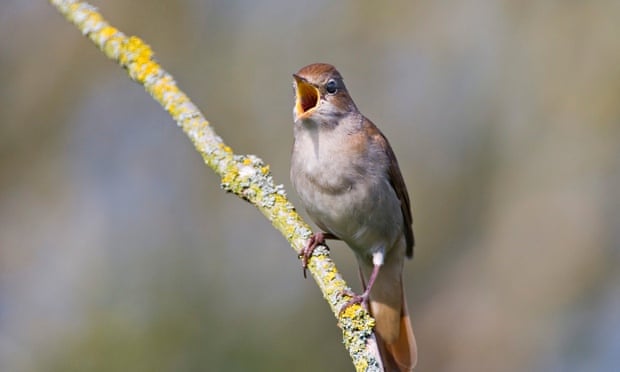
Kent nightingale habitat gets a welcome reprieve

Developers scale back housing building plans at Britain's best site for nightingales.


December 22, 2018 at 8:30 am


The threat to important habitat for the UK’s dwindling population of nightingales has receded somewhat with the decision by Homes England to scale back its plans for the Lodge Hill site in Kent from 2,000 houses to 500.

Aside from reducing the numbers of houses, Homes England also said that it is now only intends building outside the boundary of the protected area.

The long-running effort to save Lodge Hill, Britain’s best site for nightingales and a Site of Special Scientific Interest (SSSI) has been going on since 2014, when it was announced that 5,000 houses were to be built.

Three rounds of public campaigning took place in 2014, 2017 and 2018, led by the RSPB and Kent Wildlife Trust in partnership with several other organisations.

Lodge Hill holds up to 85 singing nightingales, out of a national population of only 5,500 in a 2012 British Trust for Ornithology survey.

Thursday, 6 December 2018

RSPCA investigates shooting of swans in Kent

Five cygnets and their parents were shot, wrapped in plastic bags and thrown down bank of a stream

Press Association

Mon 3 Dec 2018 12.03 GMTFirst published on Sun 2 Dec 2018 11.40 GMT

A family of swans has been shot and killed in what has been called a “senseless” attack.

The bodies of five cygnets and both of their parents were found wrapped in plastic bags after they were thrown down the bank of a stream in the village of Benenden, in Kent.

Police were called to the scene last Sunday and the Royal Society for the Prevention of Cruelty to Animals (RSPCA) has launched an investigation.

Two of the birds’ bodies were examined by staff at RSPCA Mallydams Wood Wildlife Centre in Hastings, East Sussex. 

“It’s clear that these poor mute swans have been shot and killed deliberately – one of the birds was peppered with pellets,” said RSPCA inspector Dave Grant.

“It’s absolutely disgusting that someone would purposefully target and kill these beautiful birds, and it’s heartbreaking that an entire family has been wiped out in this cruel incident.”

PC Daniel Perry said: “Kent police was called at around 10am on 24 November to a report that a number of swans were found dead in plastic bags by a stream in Stepneyford Lane in Benenden.

“Officers from the rural task force attended to carry out inquiries at the scene, and are continuing to assist the RSPCA to establish the circumstances of the incident.”

• This agency report was amended on 3 December 2018 to take account of new information that the weapon used in the attack was likely not to have been an air gun.

Wednesday, 28 November 2018

Man, 39, trapped wild birds by putting super-strong glue on feeders in his garden so he could keep them in cages in his house


Police raided home of Julius Gadzor in Kent after tip off from the RSPCA
They found wild birds trapped in cages and feeder and branch smeared in glue
Gadzor has avoided jail after an unusual prosecution for keeping wild birds 


PUBLISHED: 12:16, 19 November 2018 | UPDATED: 13:25, 19 November 2018

A 'cruel' man who put strong glue on a nut feeder and tree branch so he could catch garden birds to keep in his home has avoided jail.

Julius Gadzor, of Gravesend, Kent, covered the feeder with rat glue before showing off the wild finches in cages in his home.

The 39-year-old was charged with the unusual crimes of possessing wild birds, using bird lime and possessing items used for trapping birds after an investigation by Kent Police and the RSPCA. 

Julian Gadzor was prosecuted after using strong glue to catch wild birds for his home

Photos from his Facebook show the many cages, some tiny, which he used to house the birds

Gadzor's Facebook page, which claims he went to school in Slovakia, shows he was not afraid of showing off the wild finches and other colourful garden birds he caught.

In one photo, he wrote: 'My wall hahaha', next to the picture of 12 birds in eight cages. It is unclear however whether the birds pictured are those he trapped.

Another photo shows a greenfinch, common in many British gardens, in a cage.

Police today released photos of the branch and feeder which Gadzor had put glue on to catch the birds. 

Gadzor was given a 28-day curfew order when he appeared at Medway Magistrates' Court last Monday, and also ordered to pay £300 in costs and a £85 victim surcharge. 


Monday, 12 March 2018

How do you solve a problem like my rhea? Ostrich-like big bird causes traffic chaos after escaping enclosure and running along country lane


Rhea, native to South America, was spotted running down a lane in Kent
Ostrich-like bird had escaped from a nearby farm and caused traffic chaos
It was spotted jogging around in Speldhurst, Kent, around 11.30am on yesterday
Owner Janet Lamb, who owns 13 of the birds, says they do sometimes escape

PUBLISHED: 10:41, 7 March 2018 | UPDATED: 11:08, 7 March 2018

An ostrich-like bird caused traffic chaos after it was spotted running down a country lane in Kent yesterday. 

The rhea, native to South America, was seen holding up traffic in the roads around Royal Tunbridge Wells, Kent, after it escaped from its enclosure on a nearby farm.

It was spotted jogging around in Speldhurst, Kent, around 11.30am on Tuesday.

The rhea, native to South America, was seen holding up traffic in the roads around Royal Tunbridge Wells, Kent, after it escaped from a nearby farm yesterday afternoon

Psychotherapist Michelle Brown snapped a picture of the bird as she drove down the country lane.


Monday, 30 January 2017

Red kites are believed to be breeding in Kent again after 150 years


By jane_bakowski  |  Posted: January 15, 2017

Strong signs that red kites, which died out in England almost 150 years ago, are breeding in Kent have been welcomed by the RSPB.

Reports of sightings of the dazzling bird, unmistakeable with its forked tail and angled red wings tipped with black, are pouring in from all over the county . Although unable to confirm that there are breeding sites in Kent, spokesman Tim Webb said: "The county does have the right habitats and conditions so it's amazing the birds haven't spread sooner from their stronghold in the Chilterns."

Hunted down as "vermin" for many years, red kites were declared extinct in England in 1871. A few survived in remote parts of Wales, but even by the 1960s, by now protected, numbers were tiny.

Since being re-introduced to various parts of the UK, however, red kites have begun to thrive. No longer on the endangered species list, the large, graceful birds of prey are frequently spotted soaring above the M4 motorway. They are also often seen in the Midlands and North. However it has taken them some years to reach Kent, which is why birdwatchers are so excited.

"I saw one above my house in Paddock Wood the other day," said gardener Trevor Davies. "It was a wonderful sight, it is s

Sunday, 15 May 2016

Bird of prey, thought to be a hawk, spotted in Shepway, near Maidstone

12 May 2016
by Joshua Coupe
Are you missing a pet bird? A mystery hawk has been spotted in Maidstone.

The large bird of prey was photographed by Tina Burch in Highland Road, Shepway, earlier today.

It is not known if it's a pet or wild bird, but Mrs Burch said it has been spotted on the street for the past few weeks.

Tina Burch spotted the hawk in Shepway

She said: "I've seen it flying up and down and then this morning I saw it sitting in the tree. I was able to get a picture of it.

"It's still got a bit of string attached so I guess it belongs to somebody."

Previously experts have warned members of the public not to approach the birds, which prey and feed on other animals.

They are part of the same family as buzzards, owls, harriers, eagles and vultures.

Source ...

Friday, 6 May 2016

Bird of prey thought to be Harris's hawk spotted in Canterbury city centre


04 May 2016
by Gerry Warren

Shoppers in Canterbury city centre were stunned to see a large bird of prey nonchalantly sunning itself while perched on a restaurant sign this morning.

The large bird is thought to be a Harris's hawk, but is also similar to a small golden eagle, except for its white-tipped tail.

It was photographed by John Hippisley, who runs city ghost tours, outside Pret a Manger in The Parade.

He said: "I was walking through the city and saw people gathered round pointing up at something and went over to investigate.

"It was certainly an impressive looking bird and I noticed all the pigeons had cleared off pretty sharpish.

"I noticed it has jesses around its legs so was likely to be a falconer's bird and they sometimes fly birds of prey if there is a pigeon problem.

"It just stayed their sunning itself for about 30 minutes before flying off."The hawk was being flown by a falconer hired by the Whitefriars shopping centre to tackle the pigeon problem, but the bird is said to have gone "AWOL".

Spokesman Martyn Barr said: "We started to use birds of prey to humanely tackle the pigeon problem almost four years ago and contract Rentokil to do it.

The bird was spotted in the city centre. Picture: John Hippisley.

"The hawk is flown from the multi-storey car park where there is a particular issue with pigeons and their mess.

"I understand the bird was active today but has decided to go AWOL and the falconer is trying to get it back."

The Harris's hawk is a native of South America but many falconers fly them in the UK.


Sunday, 21 February 2016

Eagle big enough to snatch a dog on the loose in Kent

Bird with a wingspan of 9ft is believed to be flying around Kent after it escaped from a midday show in Dartford

3:19PM GMT 15 Feb 2016

A huge hunting eagle capable of carrying off an adult dog in its massive talons is on the loose in Kent.

Rex the Steller's sea eagle, who went missing after a birds of prey demonstration, has a wingspan of 9ft and is considered the most aggressive of its kind - and is easily capable of killing a Jack Russell.

The king of the skies can carry off prey weighing up to 13lbs, the weight of an adult Shih Tzu, a miniature poodle, or an Italian Greyhound and should not be approached.

Home to far eastern Russia, the eagle usually feasts on wild salmon, but is more than partial to pets and wild birds, which it dives down upon and clutches with its powerful talons.

In the wild some Steller's have been recorded preying on young seals weighing more than 18lbs.

The huge bird, which makes a deep barking cry when aggressive, is believed to be flying around Kent after it escaped from a midday show in Dartford on Sunday.

Since Rex's disappearance, the Eagle Heights Wildlife Park have been attempting to find him but the transmitter they had hoped to use has failed.

The park, which last heard that Rex was seen on Monday afternoon perched in a tree in Lullingstone, Kent, is appealing to the public for help.


Monday, 18 January 2016

Two months of Christmas for town unable to remove festive tree until February after dove nested in it

Council told it will break bird protection laws if the collar dove nesting in the 25ft-tall Christmas tree is disturbed

By Agency

6:32PM GMT 17 Jan 2016

A town's 25ft-tall Christmas tree will have to remain standing for at least another month after a dove decided to nest in it.

The fir tree in Paddock Wood, Kent, was due to be taken down on January 5, but bosses at Paddock Wood Town Council were told it would break bird protection laws if the collar dove was disturbed.

The town, which has a population of 8,200, will now be 'celebrating Christmas' until at around mid-February, which the collar dove chicks are full fledged and able to take wing on their own.

The bird with its clutch of eggs was discovered last week as council contractors set about removing decorations from the tree.

It is a lovely story. I hope she manages to raise her babies. I would only ask people to stay away from the tree and leave the dove in peace
Parish clerk Nichola Reay

All wild birds and their nests are protected under The Wildlife and Countryside Act 1981, which makes it illegal to 'intentionally take, damage or destroy the nest of any wild bird whilst it is in use or being built'.

The Act adds that it is illegal to 'intentionally or recklessly disturb any wild bird while it is nest building, or at a nest containing eggs or young, or disturb the dependent young of such a bird'.

The maximum fine for disturbing a wild bird is £5,000 and/or six months in jail.

Friday, 2 October 2015

Giant bald eagle that can kill a toddler escapes and is on the loose


14:30, 1 OCT 2015
UPDATED 16:06, 1 OCT 2015
BY THOMAS HORNALL

The massive bird, who has an incredible 7ft wingspan, flew off after finishing a demonstration at Raptor Centre in Groombridge, Kent

Parents are being warned to keep small children inside after a bald eagle went missing that is so big it can kill a toddler.

The massive bird, who has an incredible 7ft wingspan and three-inch-long razor-sharp talons, flew off after finishing a demonstration.
Helga the bald eagle
Helga went missing from the Raptor Centre in Groombridge, Kent, on Tuesday afternoon.

Now locals fear for the safety of their pets and children - because bald eagles dive-bomb prey at 99mph.

A local resident, who has five Jack Russell terriers and a six-year-old, said: "I'm definitely keeping them all inside.

"I don't think our child is at risk, but I definitely don't want some giant bird swooping down and carrying off one of my dogs.

"They're like family to me. I hope they catch this menace before tragedy strikes.

"The sad thing is, the bird will only be doing what comes naturally to it - I just don't want to see anyone lose their pets or an eye, so I would urge everybody to keep their small loved ones inside."


Sunday, 27 September 2015

Ultra rare North American bird makes spectacular arrival in Britain

THE birdwatching world has gone into a frenzy thanks an ultra rare bird's arrival on Britain's shores.

By STUART WINTER, NATURE EDITOR 
Acadian Flycatcher.jpg
PUBLISHED: 19:36, Tue, Sep 22, 2015 | UPDATED: 19:59, Tue, Sep 22, 2015

Suspected to be an Acadian flycatcher from North America, the historic landing on the beach at Dungeness in Kent is about to spark the biggest mass gathering of twitchers in years.

Thousands of twitchers are expected to descend on the south easterly tip of the country overnight to catch a sight of the small robin-sized bird that should, by rights, be basking in the tropical forests of Panama or Colombia.

Somehow it has been caught up in a fast-moving Atlantic weather system that has taken it from its nesting grounds in eastern USA to the famous gravel headland overlooking the English Channel.

Dungeness is renowned for its huge nuclear plant as well as being the backdrop of music videos and atmospheric crime dramas.

Continued ...

Wednesday, 18 February 2015

Public opinion forces UK government to hold enquiry over Nightingale site development

One of England's best Nightingale sites is under threat

The Government has heeded pleas from more than 12,400 people concerned about the future of England’s finest Nightingale site - Lodge Hill in Kent.

It has called in for a public inquiry on an application to build 5,000 homes on Lodge Hill, a Site of Special Scientific Interest in Kent.

Martin Harper, Conservation Director of the RSPB, which led a campaign in support of the site, says: “There has been public outrage and condemnation that a site of national importance for wildlife has been considered for development without public scrutiny.

“We are delighted that the Government has listened to these concerns, and has reached the only logical conclusion.”

Call in means that this case will be examined at the highest level where the full merits and values of the site and associated issues can be aired.

Tuesday, 30 December 2014

A nightingale sings – but not for much longer if housebuilding drive wipes out its haven

Campaigners fear disaster for the endangered songbirds if a plan to build 5,000 homes on a breeding site in Kent is given green light

Robin McKie, science editor

Sunday 28 December 2014 00.05 GMT

It is revered for the beauty of its song and is a beloved adornment to the British countryside. But the nightingale – hailed by Keats as a “light-winged Dryad of the trees” – is now in trouble, having suffered a catastrophic drop in numbers in recent years.

Even worse, say ornithologists, the best site in Britain for protecting the songbird – at Lodge Hill in Medway, Kent – is under threat of destruction. Its loss, they say, could deal an irreparable blow to the nightingale in this country. It could also open the floodgates to commercial exploitation of hundreds of other protected environmental sites across the country.

“Lodge Hill is the only Site of Special Scientific Interest (SSSI) in the UK that is specifically set up to protect nightingales,” said Sarah Lee, of the RSPB. “It is the most important site for the birds in the UK. Yet the local council want to build 5,000 homes there. It would absolutely destroy the site and the birds’ homes – and send a very worrying signal about the prospects of protecting other critically important sites in the UK.”

Sunday, 31 August 2014

Rare ‘golden eagle’ swoops past motorist at Kent roadside

29th August 2014

Residents of Kent might expect to come across the odd squirrel or rabbit on their drive to work – but certainly not a golden eagle.

Rare 'golden eagle' swoops over car in Kent
Ricky Shaw, from Ashford, was driving along Cheeseman’s Green Lane when the rare bird of prey swooped down and flew ahead of him.

Recorded on Ricky’s dash-cam, the eagle is initially camouflaged against the bushes lining the road but the huge creature soon emerges, its six-foot wingspan clear to see as it flies up and out of shot.

Thursday, 7 August 2014

Concern surrounds the shooting of thirty birds in Tudeley

By Paddock Wood Courier | Posted: August 04, 2014

By Amy-Clare Martin

MYSTERY surrounds the death of thirty wood pigeons at a Royal Society for the Protection of Birds reserve in Tudeley.

The dead birds were discovered by a dog walker in Tudeley Woods, near Half Moon Lane, on Sunday afternoon. The birds had been shot and were dumped in two large piles on the floor.

The RSPB reserve is home to a number of star species including the woodlark, the nightjar and the tree pipit.

Although wood pigeons are not endangered, questions are being raised about why the birds were shot in such numbers and just discarded on the floor.

Sue Royal, a spokesman for the RSPB, said: “Obviously it is a concern that large numbers of birds have been shot, but it is a mystery to be honest as neither we nor the landowner know anything about it.

“About 30 of them were left near a footpath. We don’t know who has left them there or why the birds were killed.”

The police have been informed.


Tuesday, 10 June 2014

Wild birds such as goldfinches and chaffinches caught with traps, nets and glue then sold in Kingsnorth, Ashford, and across Kent say police and RSPB

Wild birds are being snatched from gardens and fields across Kent before being sold illegally.

Goldfinches, chaffinches and other attractive small birds are being caught using traps, nets and GLUE in what police are describing as a network of organised crime.

PC Michael "Geordie" Laidlow from the police's rural partnership team is one of six Kent officers dedicated to dealing with wildlife, environmental and heritage crime.

He said: "The theft of wild birds seems to be on the increase throughout Kent. It's something we come across quite often. There are networks of thieves operating across the county – I would call it low-level organised crime.

Spanish dry spell sends nesting Black-winged Stilts to England

Posted on: 29 May 2014


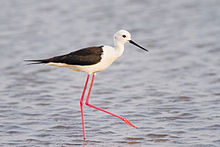
A small influx of Black-winged Stilts has resulted in two – and possibly even three – pairs attempting to nest at RSPB reserves in West Sussex and Kent.

It is thought that a dry spell in southern Spain has displaced these wetland birds to southern Britain, and it seems likely that a changing climate may bring them to Britain more regularly in future. The charity has set up a 24-hour watch on the nests with the help of local volunteers, to protect them from egg collectors who target the nests of the rarest species in Britain.

Himantopus himantopus - Pak Thale.jpgA flock of 10 was seen in Kent and the Isle of Wight earlier this spring, and pairs were seen mating in Essex and Kent (see this month's Birdwatch, page 12). The only previous successful breeding records in Britain are from Norfolk in 1987 and Nottinghamshire in 1945.

One pair is nesting at Medmerry RSPB, West Sussex, while the other pair are at Cliffe Pools RSPB on the north Kent marshes, where another pair also appear to be making a nesting attempt. The stilts’ presence is a tribute to the conditions at both reserves – Medmerry is the largest open-coast managed realignment scheme in Europe and the RSPB’s newest reserve. It was created between 2011 and 2013 by the Environment Agency and consists of mudflats, tidal lagoons, saltmarsh, wildlife-friendly farmland and dragonfly-rich ditches. 

Friday, 16 May 2014

Gay penguins in Kent zoo are 'the best parents'

14 May 2014 Last updated at 12:04

Park owner Anthony Binskin told BBC reporter Miranda Shunke the penguin couple needed no help.

A same-sex penguin couple are rearing a chick after it was abandoned by its parents at a zoo in Kent.

Staff at Wingham Wildlife Park stepped in after the baby bird's mother had to leave the egg because the father refused to help her incubate it.

The two male Humboldt penguins, Jumbs and Kermit, were given the egg, which hatched a month ago.

Park owner Tony Binskin said: "These two have so far proven to be two of the best penguin parents we have had yet."

Jumbs and Kermit were first seen pairing up in 2012, leaving two females without mates.

"Whilst it was nice to see two of our birds pair up, it actually meant that we were left with not two but four birds unable to reproduce within our collection," Mr Binskin said.