As regular CFZ-watchers will know, for some time Corinna has been doing a column for Animals & Men and a regular segment on On The Track... particularly about out-of-place birds and rare vagrants. There seem to be more and more bird stories from all over the world hitting the news these days so, to make room for them all - and to give them all equal and worthy coverage - she has set up this new blog to cover all things feathery and Fortean.
Showing posts with label starvation. Show all posts

Monday, 25 March 2019

Cause of mass bird deaths revealed


09/03/2019
Some 56 Mallards and a Canada Goose died in a park in Calgary, Canada, due to starvation and exposure. Alberta Environment and Parks confirmed the reason behind the grim scenes, which were discovered during the last week of February in Elliston Park. A few carcasses were discovered initially by Heather and Wayne Clarke, with more and more dead birds being found in the following days. This sparked an investigation with the outcome ruling that limited foraging opportunities drove the mass deaths.
Alberta Environment and Parks and the Canadian Wildlife Health Co-operative at the University of Calgary investigated the incident at the stormwater pond, and in a statement said: "[We] have determined that the ducks suffered from starvation and exposure, which was the likely cause that led to the mortality of 56 Mallards and one Canada Goose. Some additional tests are underway to rule out other causes of death."
Due to extremely cold temperatures, birds that spend the winter as far north as Calgary can face a particularly tough time – particularly wildfowl, which depend on open water. It's thought that particularly harsh conditions sparked the sudden death of such a large number of birds.
When Mr and Mrs Clarke first came across the load of dead animals there were only a handful of bodies, but open further visits to the pond during the same week many more appeared. Wayne Clarke said: "We couldn't believe it … after a week, 50 birds, scattered around – unbelievable. I've been hiking around this lake here for 17 years and I've never seen it like this."
Brett Boukall, Senior Wildlife Biologist at Alberta Environment and Parks, added: "When we see this overcrowding, the birds might not be able to feed effectively, they might not be able to protect themselves from the elements. It's possible that if one of them is carrying a disease, it can spread more quickly when they’re in a tighter group in a smaller area."


Friday, 23 November 2018

Queen's personal swan guard hits out at RSPB's 'ban the bread' advice which he says is starving the regal birds


Successful campaign discouraged the tradition as being unhealthy to swans
Queen's Swan Marker, David Barker, says 'there is no good reason' for the notion 
Swan numbers are plummeting and they are malnourished as a result
Mr Barker says swans are even straying into busy roads in search of fodder 
PUBLISHED: 17:53, 14 November 2018 | UPDATED: 18:24, 14 November
Thousands of majestic swans are going hungry this year after a viral campaign urged people to stop feeding them bread - despite it being perfectly healthy for them.
The Queen's personal swan guard has slammed the campaigners for 'starving' the swans - because people have stopped feeding them bread.
'Ban the Bread' was a highly successful campaign, officially launched by rescue charity Swan Lifeline and backed by the RSPB's advice, which claimed the centuries-old pastime is harming birds.
But the Queen's Swan Marker David Barker, Member of the Royal Victorian Order, said there is 'no good reason' not to feed the swans bread and that many are underweight as a result of the ban.
The Queen is accompanied by the Royal Swan Marker, David Barker, as they watch the Swan Upping on the River Thames near Windsor, July 2009
The charity Swan Lifeline ran an extremely successful 'Ban the Bread' campaign which discouraged members of the public from feeding the birds bread
Mr Barker, the country's leading ceremonial swan expert, added that they are put at further risk by wandering onto roads in search of food, because they are not getting fed.
The campaign also falsely claims bread causes the syndrome 'angel wing' - which is a birth defect and cannot be caused in later life.
Mr Barker said the coverage of the campaign has been inaccurate and 'confusing' for the public.
He added: 'Supporters of the campaign claim that bread should not be fed to swans on the grounds that it is bad for them. This is not correct.
'Swans have been fed bread for many hundreds of years without causing any ill effects.
'While bread may not be the best dietary option for swans compared to their natural food such as river weed, it has become a very important source of energy for them, supplementing their natural diet and helping them to survive the cold winter months when vegetation is very scarce.
'There is no good reason not to feed bread to swans, provided it is not mouldy.
'Most households have surplus bread and children have always enjoyed feeding swans with their parents.'
The concept that bread could be bad for aquatic life gained traction this year but the effects of it can already be seen.

Thursday, 26 April 2018

Sick sea birds are showing up on central Florida beaches


Posted: Apr 13, 2018 11:17 AMUpdated: Apr 13, 2018 4:21 PM GDT

 (WESH) Scores of rare sea birds are washing up on central Florida beaches, starving and near death.

Northern Gannets are rarely seen in Brevard County, but they migrate far off the coast, heading to their breeding grounds on the coastal cliffs of Maine and Canada.

In a tragedy that's not been seen there in more than 15 years, many are not making it.

"They are usually very exhausted, very thin, and it's just touch and go whether they're going to make it or not," said Tracy Frampton at the Florida Wildlife Hospital.

Since late March, Frampton says the hospital has received a total of 85 birds.

In a few cases, the Northern Gannets have regained their strength, and can be released to resume their migration.

Biologists aren't sure why so many haven't been able to find or catch the fish they need to survive.

Read more: 
http://bit.ly/2qsx8Ve

Source  

Tuesday, 19 July 2016

Starving seabirds washing up dead on Washington beaches


By JOHN RYAN • JUL 16, 2016

Seabirds have been washing up dead on beaches in Washington and British Columbia this summer, and scientists can't say why.

Rhinoceros auklets are one of the most common birds in the network of inland waterways shared by Washington and British Columbia. Since May, volunteer "citizen scientists" on the north side of the Olympic Peninsula and across the water in Victoria, British Columbia, have found dozens of the puffin-like birds washed ashore.

It's a tiny toll compared to the dieoffs of other species of seabirds in 2014 and 2015. Common murres and Cassin's auklets washed up by the hundreds of thousands up and down North America's west coast.

But scientists are concerned nonetheless.

"There's something larger going on here," University of Washington biologist Julia Parrish said. “If we ignore it and only pay attention when it’s really dire, then it’s often too late to do anything about it.”

Parrish runs the Coastal Observation and Seabird Survey Team, whose volunteer beachwalkers help scientists keep tabs on seabirds and garbage floating ashore in five western states.  


Wednesday, 6 January 2016

Dozens of starving seabirds grounded inland in Southcentral Alaska

December 30, 2015

Normally found skimming the North Pacific, seabirds known as common murres are appearing inland in the Matanuska-Susitna Borough and elsewhere in Southcentral Alaska, starving and unable to fly.

Reports of grounded murres have emerged from Moose Pass to north of Talkeetna, with many found this week in the Susitna Valley. The foot-tall black and white birds that resemble small penguins are showing up in odd places -- on the shoulder of busy Knik-Goose Bay Road outside Wasilla, just off a sled dog trail in Willow, tucked up next to a house in Houston.

The influx of murres is inundating local wildlife rehabilitation centers.

On Wednesday alone, 20 murres arrived at the Bird Treatment and Learning Center in Anchorage from Alaska WildBird Rehabilitation Center in Houston, where Susitna Valley residents are bringing grounded birds.

Hundreds of people shared social media posts about the bizarre murre sightings. One Valley resident posted a pathetic photo of a murre on its side in the snow on a Facebook group for Mat-Su lost and found pets with a comment: "This little fella is sitting in our driveway. I'm not sure what's wrong with him but he can't seem to fly away -- he can waddle and that's about it."

Friday, 20 November 2015

Male tits would rather starve than give up their partner, study suggests

Oxford University found male great tits would rather starve than leave their mate

By Sarah Knapton, Science Editor
12:01AM GMT 13 Nov 2015

It is said that the way to a man’s heart is through his stomach, but a new study suggests that when it comes to love males will actually forgo food rather than give up their mate.
Oxford University has been monitoring the great tits of Whytham Woods, in Oxfordshire, to test the strength of the bond between mating pairs.

Much like humans, birds tend to be socially monogamous: they find a partner to mate with and remain exclusive with this partner for many seasons.

However researchers thought that they may split up if being together meant that one had to sacrifice eating.

To test the theory they created two special bird boxes full of seed which had electronic doors that could only be opened in the presence of special radio tags attached to the bird’s legs. The male tit could not open the female’s seed box, and vice versa.

But rather than going their separate ways in their hunt for a meal, researchers found that the male stayed with the female, even when it meant starving.


Monday, 17 November 2014

High ocean temperatures endangering seabirds?


POSTED: 11/16/2014 02:47:43 PM PST0 COMMENTS| UPDATED: A DAY AGO

Small seabirds are washing up dead on local beaches, an unusual phenomenon that suggests high ocean temperatures are causing starvation.

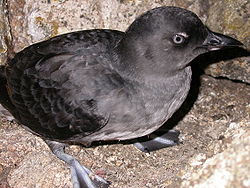
Cassins Auklet.jpg
The hardy gray birds, call Cassin's auklets, are rarely sighted in offshore waters. They normally live in the distant open ocean, feeding on small crustaceans in the cold Pacific Ocean.

But this month, large numbers of thin, dying or dead birds are being seen along our coast. Most reports come from San Mateo County beaches, such as Pescadero's Gazos Creek and Pacifica's Linda Mar. Bodies also have been found on the coasts of Marin and Sonoma counties.

A preliminary analysis of the bodies of five young birds by the National Wildlife Health Center concluded that they were in poor or emaciated body conditions, "consistent with a lack of zooplankton," according to Beach Watch, a monitoring project of the Farallones Marine Sanctuary Association, which found and submitted the birds.

Barbara Kossy, of Moss Beach, recently spotted one while she kayaked on Half Moon Bay.

"This bird seemed sort of listless and didn't react in any way," said Kossy, a board member of the San Mateo Resource Conservation District. It was an unusual sighting, and she kept her distance.

"Typically, they look at you -- or, if startled, they either fly or dive," she said. "The bird was clearly unwell."


Saturday, 13 April 2013

Stone curlews died underweight because of 'cold spring'


One of the UK's rarest birds is being put at further risk by the cold spring, the RSPB has said.

The bodies of eight underweight stone curlews have been discovered in fields in Norfolk, Suffolk and Wiltshire over the past few days.

The birds are thought to have come from Africa and Spain but struggled to find enough food to survive.

Conservation director Martin Harper said it was a "stark reminder of how fragile this species is".

The birds weighed about 300g (10oz) compared to what is considered a healthy weight of 450g (15oz).

The RSPB said there were about 400 pairs of stone curlews in the UK.

Other birds have been affected by the cold weather.

At the end of March, hundreds of dead birds including puffins were washed ashore after severe conditions in the North Sea.

The RSPB said it had also received reports of short-eared owls and barn owls found dead after cold weather hampered their ability to hunt.

Mr Harper said: "We should be hearing the sound of chiffchaffs calling from the trees, a classic sign that spring is here, but that isn't the case.

"Some may have stalled on their migration route, while for others the severe lack of insect food available means they are conserving what little energy they have."


Friday, 29 March 2013

Hundreds of dead puffins have washed up on east coast beaches


Hundreds of puffins washed up on the east coast of the UK are likely to have died of starvation as a result of the recent severe weather.
RSPB Scotland said it has taken numerous calls from members of the public about the birds, found on beaches stretching from Aberdeen and Angus down to Northumberland.
It is the worst puffin "wreck" — the death of a large number of seabirds in a single incident — in almost 50 years, the conservation charity said.
Many razorbills and guillemots have also perished, prompting fears about the upcoming seabird breeding season.
Dr Barnaby Smith, from the Centre for Ecology & Hydrology which is part of the Natural Environment Research Council, said the birds may have been using up all their resources just fighting against the unseasonably cold temperatures and strong easterly winds.