As regular CFZ-watchers will know, for some time Corinna has been doing a column for Animals & Men and a regular segment on On The Track... particularly about out-of-place birds and rare vagrants. There seem to be more and more bird stories from all over the world hitting the news these days so, to make room for them all - and to give them all equal and worthy coverage - she has set up this new blog to cover all things feathery and Fortean.
Showing posts with label invasive species. Show all posts

Sunday, 21 July 2019

Invasive parrots have varying impacts on European biodiversity, citizens and economy


JULY 15, 2019
Non-native parrots can cause substantial agricultural damage and threaten native biodiversity, although impacts vary strongly depending on where these parrots have been introduced. Brought to Europe as pets, escaped or released parrots have established numerous wild populations across Europe. Tens of thousands of ring-necked and monk parakeets make up the bulk of Europe's parrots, but several more species are gaining a foothold too.
A pan-European team of researchers, conservationists, wildlife managers and policy-makers worked together under the umbrella of ParrotNet, an EU COST Action, and have reviewed the available evidence on parrot damage, concluding that measures to prevent parrots from invading new areas are paramount for limiting future harm. Their findings are published in the open-access journal NeoBiota.
Introduced parrots can damage the environment, but severe impacts remain rare and localised. So far, most reports of damage are linked to the widespread and locally abundant ring-necked and monk parakeets. Studies show that in their native ranges, both species can and regularly do inflict large crop losses, but in Europe, expectations of comparable widespread and severe damage to agriculture have so far failed to materialise.
In Europe, competition with native species presents a more serious problem, especially for ring-necked parakeets as they can compete with native species for food and breeding sites. Meanwhile, in the Americas, monk parakeets are notorious for the damage their stick nests cause to power infrastructures by catching fire, yet very little evidence for such problems exist in Europe.

Thursday, 25 October 2018

Invasive forage grass leads to grassland bird decline


Date:  October 19, 2018
Source:  University of Illinois College of Agricultural, Consumer and Environmental Sciences
The prairies of North America once covered vast stretches of land, with towering grasses creating ideal nesting and forage habitat for grassland birds. But the deep, rich soil and treeless expanse also represented the ideal conditions for farming -- both row crops and cattle grazing -- in the eyes of settlers. Today, largely thanks to agricultural conversion, a mere 1 percent of tallgrass prairie remains. And what's left is now being threatened by invasive species and forest encroachment.
"With grasslands in steep decline, the birds that depend on them are also disappearing. Therefore, it is urgent that we understand how these more recent changes -- invasive species and landscape shifts -- influence grassland bird reproduction," says Scott Maresh Nelson, a doctoral student advised by Professor Jim Miller in the Department of Natural Resources and Environmental Sciences (NRES) at the University of Illinois.
In a recent study published in Landscape Ecology, Maresh Nelson and his colleagues found that a common cattle forage grass, tall fescue, is associated with nest failure in dickcissels, small grassland birds similar to sparrows.

Wednesday, 6 June 2018

The Invasive Rose-ringed Parakeet – a Threat from Hawai’i to Spain


The island of Kauai and a park in Seville, Spain are facing similar concerns over one invasive bird – the Rose-ringed Parakeet.

What do Kauai, Hawai’i and Seville, Spain have in common? Answer: the invasive Rose-ringed Parakeet.

The brightly colored bird is native in parts of Asia and Africa but the bright coloration has also led this species into  the pet trade industry. As an unfortunate by-product of their popularity as pets, the birds have been accidentally and intentionally released into non-native habitats around the world. The Kauai population was first established in the 1960s and grew to 200 individuals by the 1990s. Today experts estimate over 5,000 parakeets live on Kauai. Seville has a similar story of introduction that took place in the 1990s when 10 individuals were released after being confiscated from a pet shop. Now the populations are out of control and conservationists are concerned.


Thursday, 31 May 2018

Parakeets oust bats from nest holes


15/05/2018

Previously thought to be relatively ecologically harmless, invasive Ring-necked Parakeets have been seen attacking bats in a Spanish park and ejecting them from tree-hole roosts.

At the turn of the century, the largest colony of Greater Noctule bats in Europe occupied a park in Seville, Spain. However, between 2003 and 2017, the number of trees used by bats in the park fell by 81 per cent, according to a study at the DoƱana Biological Station in the city. Conversely, the number of nests of Ring-necked Parakeets, an introduced species native to the Indian subcontinent and East Africa, increased by a factor of 20 over the same period.

The research team documented parakeets nesting in tree cavities previously occupied by bats. The researchers also observed the 120-g parakeets chasing the 50-g bats out of their nests. Parakeets largely attacked the bats at the entrances to tree holes in the few hours before dusk, obliging the bats to flee during daylight hours (though some bats were able to fend them off). The researchers also found 20 dead and two injured noctules under nest sites, and some were fresh enough to show beak cuts on their muscle and bones. 

In parallel, parakeet numbers increased during the study period, being very scarce until 2013, but showing a 96 per cent increase in the four years thereafter. Greater Noctule bat showed a decline of 70 per cent in the same period (and an 81 per cent fall since 2003), almost a mirror reflection of the parakeet increase. By 2017, the number of tree holes occupied by noctules had eroded down to 14 from 47 in 2013, while those occupied by parakeets had increased from 159 to 311 in the same period.


Wednesday, 30 May 2018

Invasive Mice Endanger the Atlantic Yellow-nosed Albatross on Gough Island


Endangered Atlantic Yellow-nosed Albatross have been pushed to the brink of extinction by invasive mice on Gough Island in the South Atlantic Ocean. But, that will soon change. The Royal Society for the Protection of Birds is taking action to protect the albatross by removing invasive mice.

This article contains descriptions and a video of mice predating on live birds and may be upsetting.

By: Kate Lawrence

On the evening of 20 February 2018, I watched an Atlantic Yellow-nosed Albatross chick die before my eyes, as it was eaten alive by mice. I arrived at nest 14 at 9.30pm. Mice were feeding on the chick’s already open back-wound by 10 pm. And less than one hour later, the chick from nest 14 was dead.

In this line of work, you see plenty of dead animals. On Gough Island, we regularly see the remains of dead birds: albatross that crash land during extreme wind events; adults standing over dead chicks soon after hatching (cause of death unknown); and scattered carcasses of burrowing petrels and prions left after skua predation. Eggs and chicks and adult birds die of natural causes all the time. Death and predation are part of the natural ecosystem. But on Gough Island, mice are not.


Friday, 26 January 2018

Genetic drift caught in action in invasive birds


Studies of island bird populations have taught us a lot about evolution, but it's hard to catch birds in the act of naturally colonizing new islands. Instead, a new study from The Auk: Ornithological Advances examines what's happened by looking at the genetics of a species that arrived in Hawaii in the twentieth century through decidedly unnatural means—us.

Japanese Bush-Warblers were introduced to Oahu in 1929 and have since become established on all the main islands of Hawaii, providing a unique opportunity to follow post-invasion evolution on a known, recent timescale. Northern Arizona University's Jeffrey Foster and his colleagues took blood and muscle samples from 147 bush-warblers living on five islands between 2003 and 2005. Their results indicate genetic drift is occurring—Oahu's birds have higher genetic diversity than those on other islands, whose populations were founded by smaller groups of individuals, just as population genetic theory predicts. Kauai bush-warblers, however, appear to be on a distinct genetic trajectory from those on other islands. Kauai is three times as far from Oahu as the closest other islands, and appears to have received a unique subset of the overall genetic diversity found elsewhere, but it remains to be seen whether the trend on Kauai will continue in the future or if continued dispersal of birds among islands will blur these differences. "This study nicely showed genetic divergence for a very short period using the artificially introduced Japanese Bush-Warblers," according to Shoji Hamao of Japan's National Museum of Nature and Science, an expert on the species.

Monday, 25 December 2017

Welwyn Hatfield: Invasion of the parakeets


PUBLISHED: 11:01 09 December 2017 | UPDATED: 11:01 09 December 2017

Residents across Welwyn Hatfield have been all of a flutter at the sight of an unusual and brightly coloured visitor to their gardens.

A number of readers have been in touch with the Welwyn Hatfield Times after spotting flocks of bright green parakeets - a non-native species - gathering in trees and enjoying bird table offerings.

Although a sub-tropical species, the ring-necked parakeets tend to live in colder areas and their native habitat is most likely the foothills of the Himalayas.

They were first spotted in the UK in Kent in 1971.

By the 1980s, they were also in London.


Thursday, 14 December 2017

Black tern numbers plummet, invasives largely to blame


By ERIC FREEDMAN
Capital News Service

LANSING — The once-abundant black tern is far less abundant in Great Lakes wetlands, a victim of habitat loss and invasive plant species. And there’s a high risk that more colonies will be abandoned, according to a new study.

Since 1991, the number of active black tern colonies has plummeted nearly 90 percent, the study found. Major factors included changes in vegetation from invasive plants at breeding sites and land development near colonies.

“Decline of black terns in the Great Lakes region has been severe, and preventing abandonment of remaining colonies is an important stop-gap measure for maintaining the bird’s presence until the causes of its decline are better understood,” study authors Katherine Wyman and Francesca Cuthbert of the University of Minnesota wrote.

“Many scientists view continuing wetland habitat loss and degradation as a major barrier to black tern conservation in North America,” they said in a new article published in the journal Wetlands Ecology and Management. And fewer breeding sites increases the birds’ vulnerability to natural disasters.

Terns aren’t the only beneficiaries of coastal wetlands preservation and restoration.
Cuthbert said fish nurseries benefit, as do other birds such as the least bittern — a threatened species in Michigan — Virginia rail, pied-billed grebe and marsh wren. All those species need water they can walk, swim or forage in.


Thursday, 5 October 2017

Monk parakeets invade Mexico


Date: September 19, 2017
Source: Santa Fe Institute
Thanks to the international pet trade, populations of exotic animals are popping up in unexpected places worldwide. One of these successful invaders is the monk parakeet: a small, green parrot native to South America that now flies free in cities across North America, Europe, and elsewhere around the world.

Sunday, 10 September 2017

Britain's native bird populations are suffering - and here's the reason why


The number of parakeets in the UK is soaring, while native species are in decline
BY ROBERT FIRTH

16:15, 27 AUG 2017

Parakeets are on the up and up in Britain, with the population here rising by 1,455% in two decades.

The tropical bird is booming while many native birds suffer.

There are 15 times more ring-necked parakeets in the UK than in 1995, says the annual Breeding Bird Survey.

The parrots have been a popular pet since the Victorian era, but have only bred in the wild since the late-1960s, learning to cope with our cold winters.

Many British birds are doing less well, with willow tits down 80% and marsh tits by 41%.


Monday, 22 May 2017

Scientist identify key locations for spread of pin-tailed whydahs


Date: May 11, 2017
Source: The City University of New York

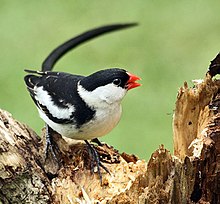
Pin-tailed Whydah (Vidua macroura).jpgInvasive parasites are a biological oxymoron. And yet, they are in our backyards! This study analyzes the case of a brood parasitic bird, the pin-tailed whydah (Vidua macroura) and its recent spread into the Americas!

Biodiversity hotspots -- or places with large numbers of species found nowhere else on earth -- also tend to make suitable habitats for invasive species that can, in turn, destabilize ecosystems and supplant indigenous biota. A new study in The Condor: Ornithological Applications predicts where the pin-tailed whydah, a songbird native to sub-Saharan Africa that has expanded its natural range thanks to the pet trade, may next spread in North America and Hawaii.

The pin-tailed whydah is a brood parasitic bird that lays its eggs in other bird species, typically small African finches, and has been introduced from Africa to Puerto Rico and southern California. In this study, researchers used species distribution models to predict where the whydah may continue to spread in the continental U.S., Hawaii, and the Antilles. To determine the whydah's potential distribution, they used sightings of this species reported to the Global Biodiversity Information Facility (GBIF). The investigators then identified suitable whydah habitat by finding correlations between locations where these finches have been seen and global climate data. As brood parasites, whydahs need hosts to complete their life cycle, so the researchers also used the presence of six known host species that have been co-introduced in the whydah's new range to predict suitable habitat. Their species distribution model indicated high habitat suitability in areas of high biodiversity where whydahs do not currently live, including the West Coast of the U.S., Hawaii, and most islands of the Antilles.

Sunday, 12 March 2017

Bird-slaying snakes ravage island forests too: study

March 8, 2017 by Marlowe Hood 

The venomous brown treesnake can grow up to three metres in length 

A non-native snake species that has already wiped out most of Guam's tree-dwelling birds is also decimating the Pacific island's forests, researchers said Wednesday. 

Growth of new trees on the US island territory may have dropped by as much as 92 percent due to the snake's presence, they reported in the journal Nature Communications.

The findings show that the devastation wrought worldwide on island wildlife by invasive species—especially snakes, rodents and mosquitoes—may be far greater than previously suspected, the authors warned.

"The full impact of the brown treesnake invasion, and the loss of birds, is still unfolding," said Joshua Tewksbury, a professor at the University of Colorado and senior author of the study.

"But our results clearly suggest that the indirect effects are going to be large, potentially affecting forest composition and structure."

Birds play a critical role by eating and spreading seeds from tropical trees.

Probably arriving on Guam via a cargo ship just after World War II, the venomous, brown treesnake—scientific name Boiga irregularis—hunts at night and can grow up to three metres in length.

By the mid-1980s, the snake had eliminated 10 of 12 forest bird species native to the island, including the Guam kingfisher and the Guam flycatcher.

The flycatcher is now extinct globally.

One doesn't have to be a scientist or a bird watcher to notice that something is awry, said the study's lead author, Haldre Rogers, an ecologist at Iowa State University.

Rewired ecosystems
"When you're on Saipan"—a neighbouring island where the treesnakes have so far been held at bay—"there is constant bird chatter," she said.