As regular CFZ-watchers will know, for some time Corinna has been doing a column for Animals & Men and a regular segment on On The Track... particularly about out-of-place birds and rare vagrants. There seem to be more and more bird stories from all over the world hitting the news these days so, to make room for them all - and to give them all equal and worthy coverage - she has set up this new blog to cover all things feathery and Fortean.
Showing posts with label England. Show all posts

Monday, 1 April 2019

Study suggesting widespread illegal killing of hen harriers on English grouse moors published


Research published today in Nature Communications shows the likelihood of hen harriers dying, or disappearing is ten times higher in areas covered by grouse moor
Published 19 March 2019
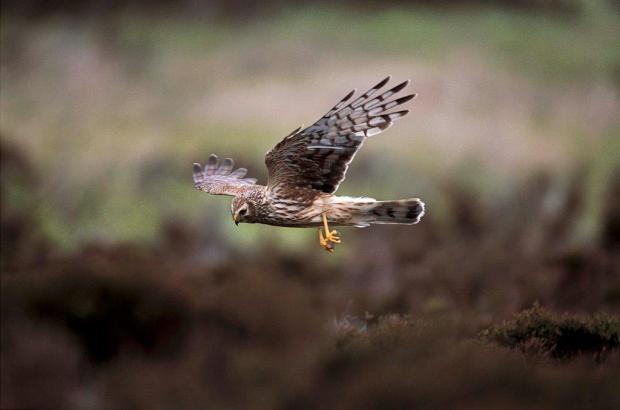
A new study reveals that young hen harriers in England suffer abnormally high mortality compared to populations in Orkney and mainland Scotland and the study provides compelling evidence that the most likely cause is illegal killing in areas associated with grouse moor management.
Published today in Nature Communications this paper represents the culmination of a 10-year Natural England study involving 58 satellite tagged hen harriers. The analyses have been led by the University of Cape Town and Aberdeen University with the provision of land use data by the RSPB.
The study showed the likelihood of hen harriers dying, or disappearing, was ten times higher within areas predominantly covered by grouse moor, compared to areas with no grouse moor. The study revealed that 72% of tagged harriers were either confirmed or considered very likely to have been illegally killed.
The hen harrier, sometimes called the ‘skydancer’ because of its amazing acrobatic display in the breeding season, is one of England’s rarest birds and is legally protected. Illegal killing of hen harriers has long been thought to limit their population size, but identifying the scale of these crimes and their impact on harrier populations has been difficult because they occur in remote areas and evidence is likely to be destroyed, thus successful prosecutions are rare.
This long-term study has enabled patterns of disappearances to be assessed across a large number of birds. This provides overwhelming evidence that illegal killing is occurring on some grouse moors, where some gamekeepers view hen harriers as a threat to their grouse stocks.
Rob Cooke, Natural England Director said:
This research identifies the scale of the problem hen harriers have faced on grouse moors. It makes for sobering reading and shows how vital it is that everyone involved in the future of this wonderful bird pulls together. Natural England is working in partnership with a wide range of stakeholders, including moorland communities, conservation organisations, police and landowners to implement the joint Hen Harrier Action Plan which aims to improve the conservation status of this at-risk bird.
Last year’s Hen Harrier breeding season was the most successful in over a decade with 34 chicks fledged across the country. While this was very encouraging we recognise that a continued partnership approach is required to combat illegal persecution of these rare birds and ensure that numbers of breeding hen harriers continue to grow.”

Wednesday, 18 July 2018

Common cranes 'here to stay' after recolonising eastern England


Model predicts population of UK’s tallest bird could double within 50 years after its return to the east of England following a 400-year absence

Press Association
Tue 17 Jul 2018 06.01 BST

Common cranes which recolonised eastern England less than 40 years ago after a 400-year absence are now here to stay, research has found.

There could be as many as 275 breeding pairs of the UK’s tallest bird within 50 years, scientists at the University of Exeter, the RSPB and the Wildfowl and Wetlands Trust (WWT) predict.

Cranes were lost from the UK as a breeding bird in the 16th century as a result of hunting and the drainage of large areas of wetlands, but some returned to the east of England in 1979.

Conservationists supported the small population, but they breed slowly and their numbers remained low over the next two decades, leaving the population at risk of disappearing again if hit by problems such as disease.

A new population model, published in a paper in the journal Animal Conservation, found that an important part of the growth in numbers until 2010 were new arrivals from continental Europe.


Wednesday, 28 June 2017

Hen harriers are on the brink of extinction in England after researchers find there are only four breeding pairs left in the country

Number of breeding pairs in England fell from 12 in 2010 to just four in 2016
Hen harriers are the most threatened birds of prey in the UK due to illegal killings
The number of breeding pairs in Wales also fell to 35 from 57

By Press Association and Phoebe Weston For Mailonline

Published: 07:50, 28 June 2017 | Updated: 11:19, 28 June 2017

Hen harriers are on the brink of extinction in England after the number of breeding pairs fell to four last year, according to worrying new figures.

The fifth national hen harrier survey showed the number of breeding pairs of the bird of prey in England fell from 12 in 2010 to just four in 2016.

Scotland – which is home to 80 per cent of the UK population of hen harriers – saw its number of breeding pairs drop to 460 in 2016 from 505 six years previously.

Hen harriers mainly live in open areas with low vegetation, normally in the moorlands of Wales, Northern England, Northern Ireland, Scotland and the Isle of Man.

In winter they move to lowland farmland and river valleys.

They mainly feed on small birds and mammals and used to hunt free-range fowl which is how they got their name.

Males are pale grey while females are brown with a white rump and long tail.

The number of breeding pairs in Wales fell to 35 from 57 while Northern Ireland also experienced a drop from 59 to 46.

Hen harriers are the most threatened birds of prey in the UK due to illegal killings and destruction of heather moorland and forestry, their natural habitat.

Read more: 

Sunday, 5 June 2016

Is this why the rare hen harrier is facing 'extinction by persecution' in England?

Man let off with caution for setting 'barbaric' bird of prey traps on land owned by friends of the royal family
20 hours ago

Conservationists have expressed outrage after a man who set “barbaric” traps for birds of prey on land owned by close friends of the royal family was let off with a police caution.

RSPB wildlife crime investigators expected the 23-year-old to be taken to court and at the very least fined for an offence that can carry a six-month jail sentence – especially as he had set his traps near where a hen harrier, one of England’s rarest birds of prey, had recently been spotted.

Instead, they were “absolutely gobsmacked” to learn that North Yorkshire Police let him off with a caution.

The Independent understands that the man, who has not been named by police, had been doing gamekeeping work on the 4,500-acre Mossdale estate, owned by the Van Cutsem family. 

The Van Cutsems have been close friends of the royal family since the late Hugh van Cutsem met Prince Charles at Cambridge University in the 1960s. 

And in 2007 Prince Harry and the youngest Van Cutsem son, William, were both interviewed by police in connection with the fate of two hen harriers that allegedly disappeared from view at the same time as shotgun blasts were heard coming from the Queen’s estate at Sandringham, Norfolk.

Both men denied any knowledge of the incident, no hen harrier bodies were ever found, and the police took no action.

There is no suggestion that any member of the Van Cutsem family had any involvement in or knowledge of the attempt to trap birds of prey on the Mossdale estate. It was also not clear whether the 23-year-old man was directly employed by the estate.

Wednesday, 22 July 2015

Growing threat to England's curlews from climate change

By Matt McGrath
Environment correspondent, BBC News

Much-loved birds including curlews and cuckoos are under a growing threat from climate change in England, according to a new report.

Other species including golden plovers and lapwings are also at risk from rising temperatures in the coming decades.

The report says changing conditions in England will significantly benefit wasps, ants and many southern species.

The study is said to be the largest of its kind ever undertaken in England.

Researchers looked at the impacts of a 2 degrees C rise in global average temperatures on over 3,000 species. They projected where the most suitable ranges for these plants and animals would be found in 2080.

When the researchers looked in more detail at 155 species listed as being of high conservation concern, 38% were identified as being at risk with 39% potentially benefitting from warmer temperatures.

"The positive side of things is kind of painting maybe too rosy a glow, because many species may not get there," Dr Humphrey Crick from Natural England told BBC News.

Friday, 8 May 2015

SHOOTING FEAR: 'Very rare' hen harriers may have been killed

First published 05:00 Friday 8 May 2015 in News
Last updated 08:34 Friday 8 May 2015by Lisa Woodhouse, Assistant picture editor


A WILDLIFE charity fears three very rare hen harriers have disappeared from the Trough of Bowland and may have been killed.

The disappearance of the birds has led to the failure of two nests and up to 12 unhatched chicks.

There were only four pairs of breeding hen harriers in England and two were on the United Utilities Bowland estate.

The Royal Society of the Protection of Birds (RSPB) reports three male birds have disappeared over the last three weeks on the Ribble Valley estate and have failed to return to their partners who are relying on their prey to feed whilst protecting their unhatched eggs.

Hen harriers are birds of prey and are protected by law.

Chris Collett, communications manager for the RSPB, said: “Hen harriers are at a critically low number in England. The disappearance of these three birds and the failure of two nests is such bad news.”

He said as well as small mammals like voles, hen harriers also eat red grouse chicks.

“A report by Natural England states that the largest cause for breeding failure is illegal killing.”

There is no evidence of the reasons for the hen harrier’ disappearance.

Friday, 4 April 2014

England's only resident golden eagle seeks new partner

England's only resident golden eagle is looking for a new mate - 10 years after his last one disappeared.

The bird has occupied a site at Riggindale Valley, near Haweswater in the Lake District, since 2001.

The bird has been seen "sky dancing" - a series of dives and rises aimed at attracting a mate.

Dave Shackleton, an RSPB warden, said the eagle's best hope of finding a new partner would be a female "drifting down from southern Scotland".

Mr Shackleton added: "He will perch high up in a prominent area in the valley and launch himself and do a series of stoops and rises - a bit like a giant bat.

Saturday, 27 April 2013

Is no landscape safe? Open Spaces Society fights turbines in Forest of Bowland area of outstanding natural beauty

Forest of Bowland is the only breeding site for Hen harriers in England
The Open Spaces Society, the leading pressure-group for common land, has objected most strongly to plans from Community Windpower Ltd to erect 10 wind turbines on common land in the Forest of Bowland Area of Outstanding Natural Beauty in Lancashire. The application has been submitted to Lancaster City Council and is the company's third attempt to put turbines on the lovely Claughton Moor and Whit Moor. 

The Open Spaces Society is backing Stop Claughton Turbines and many other objectors to the scheme. The original plan was for 20 turbines, which was rejected by the council, then for 13 and now for 10. 

Kate Ashbrook, the society's general secretary, said: ‘The hillside is in the designated Area of Outstanding Natural Beauty. It is common land and open country where people have the right to walk. If wind turbines are allowed here, in this beautiful, popular and much loved place, no landscape can be safe. 

‘The development conflicts with the statutory purposes of the AONB and would destroy people's quiet enjoyment of the area. Because it is common land, the developers would need consent from the Secretary of State for Environment, Food and Rural Affairs for works on the common, in addition to planning consent. The Open Spaces Society is by law notified of all applications for works on common land and would definitely object to this one. 

‘We strongly urge Lancaster City Council once again to reject this damaging application,' Kate concludes. 

Wednesday, 9 January 2013

Hawks in danger of extinction in illegal hunting campaign


Just one breeding pair of hen harriers is left in England, warns the RSPB, which claims gamekeepers on grouse moors are being ordered by landowners to shoot the rare birds. 

Tracy McVeigh investigates

Only one pair of breeding hen harriers remains in England, according to the RSPB, which blames illegal persecution for what it fears is now the near extinction of the bird of prey in the country.

"It will be a tragedy if this bird disappears. It's a scandal that such a rare and iconic species has been deliberately persecuted to this extent," said Grahame Madge of the bird conservation charity. He said Yorkshire was now a "black spot" for British birds of prey, dozens of which were being targeted by gamekeepers on the area's vast shooting estates, who were under pressure to keep grouse and pheasant numbers high for their clients.

"It's like a return to the days of the Victorians up there; the landowners think they are a law unto themselves and the gamekeepers have to do what they're told or they'll be out of a job," he said. "And it isn't just hen harriers: our team of investigators are constantly uncovering evidence of other birds of prey being illegally shot, poisoned and trapped."

Madge said that the results which emerged a few weeks ago from scientific tests carried out on the carcass of Bowland Betty, a ringed hen harrier found in 2012 on Thorny Grain Moor in the Yorkshire Dales, proved what the charity has been saying for some time. "We found traces of lead in the bird's leg which proved what we have been saying: she was deliberately targeted, illegally shot. It may not have been the shot that killed her; she may have lingered on injured for a time, we can't tell unfortunately. But it is clear evidence, if any was needed, that there is deliberate, illegal persecution of our birds of prey ongoing."

He attacked the shooting estates for overbreeding game birds and called for the introduction of "diversionary feeding" on the estates – where food left out for nesting hen harriers and other raptors diverts the birds from attacking red grouse.