As regular CFZ-watchers will know, for some time Corinna has been doing a column for Animals & Men and a regular segment on On The Track... particularly about out-of-place birds and rare vagrants. There seem to be more and more bird stories from all over the world hitting the news these days so, to make room for them all - and to give them all equal and worthy coverage - she has set up this new blog to cover all things feathery and Fortean.

Saturday, 3 January 2015

Forest bird population crashes

By John Myers on Jan 2, 2015 at 7:00 p.m.

DULUTH, Minn. — The number of birds counted each summer on Minnesota’s Chippewa and Superior National Forests nearly doubled from 1994 to 2009 but crashed by 30 percent this year after back-to-back cold, late springs.
And the legacy of this year’s poor nesting season could last into next year, with fewer chicks hatched this summer and even fewer birds returning to be counted in 2015.

That’s the conclusion of the annual Summary of Breeding Bird Trends released recently by researchers at the Natural Resources Research Institute of the University of Minnesota Duluth.

The number of total birds counted in the survey, now in its 20th season, has moved up and down in fits and spurts but has trended up over the long haul.

Continued ...

Bird droppings cause problems for Daytona Beach swimmers

By Saul Saenz, Volusia County Reporter
Last Updated: Thursday, January 01, 2015, 6:38 PM

DAYTONA BEACH -- 

Some Volusia County beaches have high levels of bacteria which can make swimmers sick. An advisory issued Wednesday deemed the water at several beaches off Daytona Beach unfit to swim in.

Despite the advisory, supporters of our nation's veterans took a polar plunge in 65 degree waters Wednesday.

Not far away, seagulls and other birds are dropping waste along their migratory pattern, which cause unsafe levels of enterococci bacteria.

"I wouldn't let my son go in today," said concerned parent Jason Mahle.

"There's a bunch of bacteria in it. I wouldn't wanna jump in there cause you could get sick and all that," added his son, Owen Mahle.

Florida Health Department workers in Volusia County said that bacteria from the bird's droppings can cause gastrointestinal illness, upper respiratory infections, or skin infections if open wounds or sores exist.

Friday, 2 January 2015

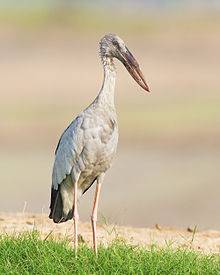
Open-billed storks flock to Raiganj

Updated: January 2, 2015 10:10 IST 

SHIV SAHAY SINGH

The bird sanctuary there attracted almost 47,000 storks in last six months of 2014
Anastomus oscitans - Bueng Boraphet.jpg
The Raiganj Wildlife Sanctuary in West Bengal’s Uttar Dinajpur district, which attracted a record 68,000 birds in 2014, has the most Asian open-billed storks in the country.
As per records available with the Divisional Forest Officer, Raiganj, the bird sanctuary recorded about 46,842 open-billed storks between June and December 2014. “The number has increased by 7,000 over the past two years from about 39,000 in 2012-13 to over 46,000 in 2014-15,” Diparna Kumar Dutta, DFO, Raiganj told The Hindu.

“The wildlife sanctuary at Raiganj is the only place in the country where you can find open-billed stork birds in such a high concentration. It has turned into an important habitat for them and steps should be taken to preserve it,” Gopinathan Maheswaran, scientist at the Zoological Survey of India and officer-in-charge of the institute’s bird section told The Hindu.

Arrival of rare golden eagle in south Delta generates stir in birding community

BY LARRY PYNN, VANCOUVER SUN JANUARY 1, 2015

A golden eagle — a rare visitor to a region known for its bald eagles — had birders all aflutter on New Year’s Day in south Delta.

“I have been here a couple of days for this guy,” said Vancouver’s Michelle Lamberson, taking her place in a line of photographers along 72nd Street near Boundary Bay. “I’ve got some decent shots.”

The juvenile bird sat like an ornament atop a large poplar tree on the edge of a golf course about 75 metres from the roadside.

Lamberson, who is director of flexible learning special projects at the University of B.C. and a birder for eight years, added: “I’ve not seen one in the Lower Mainland before. Bald eagles don’t like them.”

Mark Wynja, a birder for more than 40 years who works in a bird-supply shop in Vancouver, said the golden eagle rules the roost along the Boundary Bay foreshore. He watched as the raptor flew into a stand of red alders and scattered four bald eagles from their perches, although they later returned.

“He tends to be the dominant bird,” he said. “He’s tougher than a bald eagle, which is a glorified scavenger.”

Thursday, 1 January 2015

First Bewick’s swans arrive at Slimbridge much earlier than usual


Bewick's swans (Cygnus columbianus bewikii) are the smallest of the three types of swan found in Britain. Usually, they mate for life and the pairs spend each summer at nesting and nursing sites in northern Russia. Then, in September/October, with the Arctic winter beginning, large groups of families start moving in stages across north western Europe, seeking warmer weather. 

Many settle in the Netherlands but, traditionally, around 3,000 - 5,000 travel on to Britain, to overwinter around the rivers Ouse (WWT Welney, Norfolk), Ribble (WWT Martin Mere, Lancashire) and Severn (WWT Slimbridge, Gloucestershire). A unique bill recognition system means WWT is able to identify many of the visitors by name and knows their full family history, sometimes stretching back 20 years or more.

Bewick's swans make early arrival bringing winter to WWT Slimbridge

October 2010. The first Bewick's swans of the season have arrived at WWT Slimbridge Wetland Centre in Gloucestershire, heralding the start of winter - and it may mean that it could be even colder than last winter.

Staff opening up the Centre on October 18th saw the eight swans on the Rushy Lake at dawn. It is the earliest they have arrived since 2003, when they also arrived on the 18th. A couple of the swans called Riso and Risa are among these first returning Bewick's; Risa has been coming here for 13 years.

Arrived with last years 5 chicks
They arrived with five yearlings which were last year's juveniles. These weren't named last year as their unique bill pattern, which they are identified from, takes time to form. The eighth Bewick's to arrive is still waiting to be identified. 


Rare Eurasian Kestrel spotted near Halifax

By Julia WongVideo Journalist Global News

HALIFAX – Dozens of bird enthusiasts clamored to Eastern Passage, N.S. to catch a bird not normally seen on this side of the Atlantic Ocean.

The Eurasian Kestrel is normally found in Europe, but one bird has made its way across the Atlantic Ocean and has been spotted near Hartlen Point.

“It’s very exciting. I think it’s the second [one] that’s ever been sighted in Nova Scotia,” said Joshua Donham, a member of the Nova Scotia Bird Society.

The last time an Eurasian Kestrel was spotted in Nova Scotia was more than 25 years ago, according to Donham.

Starlings put on spectacular show on Brighton seafront

Starlings put on spectacular show on Brighton seafront

First published 06:00 Tuesday 30 December 2014 in News
Last updated 1 hour agoby Henry Holloway, Reporter


BIRD boffins say now is the best time of year to see the spectacular starlings’ aerial displays on Brighton seafront.

The RSPB has said the starling murmurations are “not-to-be missed” and the Palace Pier is one of the best places in the country to witness the swooping flock.

The murmurations can involve hundreds of thousands of starlings gathering noisily together at dusk before performing an extraordinary wheeling and swooping in unison.

At this time of year the starling numbers are boosted by migrating arrivals from continental Europe to spend the winter months here.