As regular CFZ-watchers will know, for some time Corinna has been doing a column for Animals & Men and a regular segment on On The Track... particularly about out-of-place birds and rare vagrants. There seem to be more and more bird stories from all over the world hitting the news these days so, to make room for them all - and to give them all equal and worthy coverage - she has set up this new blog to cover all things feathery and Fortean.

Thursday, 3 March 2016

Twitchers in a flap over rare visitor

09:59Wednesday 17 February 2016

Bird watchers have been flocking to Strathclyde Park to catch sight of a rare visitor to our shores.
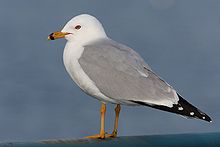
The Ring-billed Gull is the most common member of its species in the United States, and is now starting to travel across the Atlantic.
Larus-delawarensis-021.jpg
An adult Ring-billed Gull was spotted at Strathclyde Park and it is believed the same bird has returned this year.

It is one of only two who are known to have set up home in the Scotland, with the other found in Dingwall.

779 raptors killed illegally in Scotland during last 20 years says new report


A detailed 20 year review of the illegal killing of birds of prey in Scotland, published by RSPB Scotland,  confirms that 779 protected raptors were illegally killed between 1994 and 2014.

In total, 468 birds of prey were poisoned, 173 were shot and 76 were caught in illegal traps. There were also seven attempted shootings. The figures include 104 red kites, 37 golden eagles, 30 hen harriers, 16 goshawks and 10 white-tailed eagles.

 RSPB Scotland’s specialist investigations team has been meticulously documenting the illegal killing of birds of prey in Scotland for 20 years to provide a thorough public record of the scale, location and methods of wildlife crime. This effort, supported by an extensive body of peer reviewed science, has shown the severe impact of criminal activities on some of Scotland’s most iconic and vulnerable bird species. 

The report deals only with incidents that have been confirmed as involving criminal activity, either by post mortem at a government laboratory or by reliable witnesses. The number of birds actually killed will therefore be much higher (1).


Cambodia’s extraordinary waterbird colony – Prek Toal - recognised as Ramsar Site

South-East Asia’s largest waterbird colony, the 21,342 hectares Prek Toal has been designated as a Wetland of International Importance (also known as a ‘Ramsar Site’), by the Royal Government of Cambodia and recognised by the Secretariat of the Ramsar Convention on Wetlands.

Prek Toal’s Status as South-East Asia’s largest waterbird colony was under threat due to overharvesting of the waterbirds until the Ministry of Environment in close cooperation with the Wildlife Conservation Society started working back in 1999 to conserve the colony. The colony was a fraction of its current size, due to decades of egg and chick collection. Former egg collectors were employed as nest guardians, stationed on tree-top platforms throughout the breeding season to protect and monitor the breeding birds. The protection continues to this day, and Prek Toal now supports more than 50,000 breeding waterbirds of at least ten globally threatened species. These include Southeast Asia’s only breeding Spot-billed Pelicans, nearly half of the world’s Greater Adjutants and many thousands of storks and darters. It is for this reason that Prek Toal has received recognition as a Ramsar Site. Prek Toal attracts thousands of tourists annually and supports the most productive fishery in the Tonle Sap Lake

Continued ...

Like a scene from Hitchcock’s The Birds, Aldinga’s plague of brutal corellas is trashing the town, writes Rex Jory

February 28, 2016 10:30am
REX JORYThe Advertiser

DUSK in the little town of Aldinga on the Fleurieu Peninsula is astonishing. Every night since Christmas tens of thousands of white corellas or bare-eyed cockatoos have descended on Aldinga in plague numbers.

It’s like a scene from the Alfred Hitchcock thriller, The Birds. It is an extraordinary and frightening sight magnified by the shrill and piercing call of the birds. The vivid white cockatoos are trashing the town.

Residents and business people are powerless to stop the daily invasion which starts around 7pm and lasts beyond midnight. The corellas are incredibly noisy, offensively messy and brutally destructive.

The little town is littered with white feathers, splashes of cocky droppings and twigs and pine cones which the birds strip from the town’s native and introduced trees. Aldinga looks a bit like the bottom of a giant cocky cage. The possibility of health dangers from faeces and feathers can’t be ignored.


Tuesday, 1 March 2016

Autonomous acoustic sensors help researchers find endangered seabirds

Technology to detect and record bird calls could be more cost-effective than surveys by field biologists for monitoring marbled murrelet nesting sites

Date: February 25, 2016
Source: University of California - Santa Cruz

Marbled murrelets are so secretive that biologists didn't even know where they nested until the 1970s, and monitoring the populations of these endangered seabirds remains a challenge. A new study, however, suggests that autonomous acoustic sensors used to detect and record murrelet calls could offer a viable alternative to surveys conducted by field biologists.

In comparison to the traditional surveys used to find the shy birds, the new technology could enable scientists to conduct broader, more cost-effective searches, according to UC Santa Cruz graduate student Abraham Borker, first author of a paper on the new findings published in Wildlife Society Bulletin.

Marbled murrelets are the odd ducks of seabirds. For most of the year, they sport typical marine bird plumage, dark on top and light on bottom to conceal them from predators above and below. But when breeding season nears, they turn a mottled ashy brown, which blends well with the coastal old-growth redwood forests where they nest. Murrelets sometimes fly up to 50 miles inland to nest, laying a single egg on a bed of moss high in a large tree.


Triumphant return? ‘Alala to be released into the wild later this year

Published February 28, 2016 - 1:30am
HOLLYN JOHNSON/Tribune-Herald

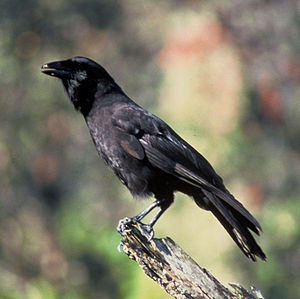
Corvus hawaiiensis FWS.jpg
An ‘alala, which is extinct in the wild, stands on a perch at Keauhou Bird Conservation Center in Volcano.

By TOM CALLIS Hawaii Tribune-Herald
It’s almost time for the ‘alala to once again spread its wings over Hawaii Island’s forests.
Hawaii’s last remaining native crow species, extinct in the wild for about 14 years, will begin to be released from a captive breeding program in September, with a dozen in all to be offered freedom by year’s end to seed what biologists hope will be their comeback.

“The ultimate goal is a self-sustaining wild population of birds,” said John Vetter, a wildlife biologist with the state Department of Land and Natural Resources. “We expect that will take a number of years. It depends how successful we are.”

Success is not guaranteed.

The birds, which forage in undergrowth, face a number of threats in the wild, including feral cats, mongooses and rats. The ‘io, or Hawaiian hawk, also is a known predator.

An earlier attempt to release ‘alala in South Kona in the 1990s proved unsuccessful as the birds became susceptible to disease and predation. Of the 27 captive-raised juvenile birds that were released, 21 died and the remaining six were recaptured.

Vetter said the state hopes for better success this time around, with a larger breeding program and plans to release the birds in the Pu‘u Maka‘ala Natural Area Reserve near Volcano.

He said the area is fenced to keep out ungulates, allowing for a more mature undergrowth, which the ‘alala rely.

“We think that will help ‘alala with escape routes for ‘io,” Vetter said. There also might be fewer threats for juveniles from non-native predators.

South Kona was selected previously because there were known wild birds in the area at the time, he said. No wild ‘alala have been seen since 2002.

The captive birds — 114 in all — are raised at the Keahou and Maui bird conservation centers, operated by the San Diego Zoo.

The birds that will be released haven’t yet hatched.

Several bird species missing

February 28, 2016,Mumbai, DHNS

 Diminishing habitats and disappearing greenery may be spelling doom for bird species in India’s urban areas, but Mumbai Bird Race 2016 provided a chilling reminder of the extent of the dangers birds face.

The total number of birds found during the Race conducted on February 14 was 212, the lowest since the Race began. Veteran ornithologist and naturalist Sunjoy Monga, who tallied the numbers, said arriving at 212 itself was not without considerable effort.

The 250 participants, split into 52 teams and a special team of 27 fanned across the Mumbai Metropolitan Region from Kalyan - Murbad to the lower reaches of the Sahyadri hills in the east along the Karjat - Murbad - Malshej stretch, were delighted to sight “rarities”.