As regular CFZ-watchers will know, for some time Corinna has been doing a column for Animals & Men and a regular segment on On The Track... particularly about out-of-place birds and rare vagrants. There seem to be more and more bird stories from all over the world hitting the news these days so, to make room for them all - and to give them all equal and worthy coverage - she has set up this new blog to cover all things feathery and Fortean.

Friday, 25 April 2014

Saudi prince's rare bird hunt stirs outrage in Pakistan after massive loan

By F. Riaz23 hours agoYahoo News

LAHORE, Pakistan - Gulf Arab sheiks have long enjoyed close ties with Pakistan, but a Saudi prince's recent shooting spree, which culled more than 2,000 rare birds from preserves, has stirred outrage in the country, just as Saudi Arabia propped up its economy with a $1.5 billion loan.

Pakistan's English-language daily newspaper Dawn broke the story this week based on a forest service report, "Visit of Prince Fahad bin Sultan bin Abdul Aziz Al Saud regarding hunting of houbara bustard," which detailed a three-week safari the prince and his entourage took. In all, the Saudi hunting party bagged 2,100 endangered houbara bustards. The prince, who owns a U.K.-built 270-foot motor superyachtand has a website depicting his philanthropic ventures, racked up the high score: 1,977 rare birds.

The houbara bustard appears on the International Union for Conservation of Nature's Red List as vulnerable to extinction, with Pakistan's population of 110,000 feared to be decreasing by 30 percent a year. The prince's hunting party pursued the bustards on bird and wildlife sanctuaries and unprotected land across Pakistan's southwestern Baluchistan province.

Rare bird visits Northam Burrows

By NDJFayeG | Posted: April 24, 2014


NORTHAM Burrows has welcomed a visitor to its shores which hasn’t been to Devon for over 50 years ago.

There have been no reported sightings of the Collared Pratincole ever on Northam Burrows – until this week. It is migratory, and usually winters in tropical Africa.

Excited birdwatchers spotted the little wader, whose favourite places are the warmer parts of Europe, southwest Asia and Africa, on the afternoon of April 21.

Word spread and other birdwatchers managed to get to the site before dusk to see it.

Early on the April 22 it seemed that the special visitor had left the area, but it soon reappeared, and stayed in the area of Northam Burrows until 2.30pm, at which point it took off and flew high east.

It spent most of its time on the Burrows hawking insects.

Steve Waite, Devon bird recorder for Devon Birds, said: “The Collared Praticole was last seen in Devon 58 years ago, when one was at Braunton Great Field on 15-18 May 1956.


Saving the lesser prairie chicken: What landowners should know


Date:
April 17, 2014

Source:
Kansas State University Research and Extension

Summary:
The recent U.S. Fish and Wildlife Service announcement, listing the lesser prairie chicken as a threatened species, brings to mind how agricultural producers, livestock ranchers and those with land enrolled in CRP could be affected. The listing might pose a challenge for some landowners, particularly in western Kansas, where the lesser prairie chicken lives. Significant habitat changes must occur to meet the 67,000-bird decade goal, and those changes will most likely have to come from livestock ranchers and grazers implementing conservation practices that benefit lesser prairie chickens.


Thursday, 24 April 2014

Maryland v. Osprey: The battle of the nest

By Susan L. Ruth, Communities Digital News


Osprey nest at MD Transportation traffic camera


WASHINGTON, April 23, 2014 — There has been a battle raging in Maryland over the past week between two federally protected Ospreys and the Terrapin State.

The conflict started a week ago when the Maryland Transportation Authority noticed an Osprey nest being build around a traffic camera along the Chesapeak Bay Bridge.

The large nest was being built at the top of a camera pole located at the toll plaza for the busy bridge.

The first problem was that as the nest grew, the camera’s view was being blocked and second was that the birds did not seem to like sharing their newly chosen nesting area with the camera and started attacking it.

According to the local news source, WTOP, the Transportation Authority reached out to the U.S. Fish and Wildlife Service for assistance in relocating the nest before more damage was done to the $6,000 camera and before any eggs were laid.

Once eggs or young birds are in the nest it becomes more difficult to move and would require a permit.

The nest was removed, and the birds rebuilt another one in the same location on the traffic camera pole.

The birds of Shakespeare cause US trouble

By Jane O'BrienBBC News, Washington

It's William Shakespeare's 450th birthday - but in the US not everybody is celebrating his legacy.

Birds feature prominently in Shakespeare's plays and poetry. Choughs, wrens, cormorants, owls, nightingales, larks and some 60 other species all have their place in the canon.

Such references have inspired bird lovers for centuries.

So much so that in 1890, a German immigrant named Eugene Schieffelin decided it would be a great idea to introduce as many of Shakespeare's birds as possible to North America.

One cold winter's day he released 60 starlings into New York's Central Park in the hope they would start breeding.

Unfortunately, they did.

"The cormorant is a voracious fishing bird," says Shakespeare Theater Company's Drew Lichtenberg. In Coriolanus there's reference to the "cormorant belly of Rome".

Sometimes Shakespeare uses birds because their names conjure an image or simply sound interesting. In The Tempest one character says he can "make a chough of as deep chat".

After Romeo and Juliet consummate their marriage they hear a bird singing. They argue over whether it's a nightingale, a bird of the night, or a lark which means it's morning and Romeo must leave.

"When the wind is southerly I can tell a hawk from a handsaw," says Hamlet, seemingly describing how he can feign madness when it suits him.

In Macbeth, Shakespeare turns to birds of the night, says Lichtenberg. After the murder of Duncan, Lady Macbeth hears the screech of an owl and never regains her sanity. It was the owl that shrieked, the fatal bellman which gives the sternest goodnight.

The US is now home to an estimated 200 million European starlings. Thickset and pugnacious, starlings are the bruisers of the avian world.

And they are now such a nuisance they are one of the few bird species unprotected by law.

"Starlings are lean and mean. In the industry they're often called feathered bullets," says Michael Begier, National Coordinator for the US Department of Agriculture (USDA) Airports Wildlife Hazards Program.

Birds feel the effects of heat in Pune

Wednesday, 23 April 2014 - 4:46pm IST | Place: Pune | Agency: DNA


Despite efforts by conservationists and citizens the cases of birds falling prey to heat strokes and heat affiliated ailments is on the rise in Pune.

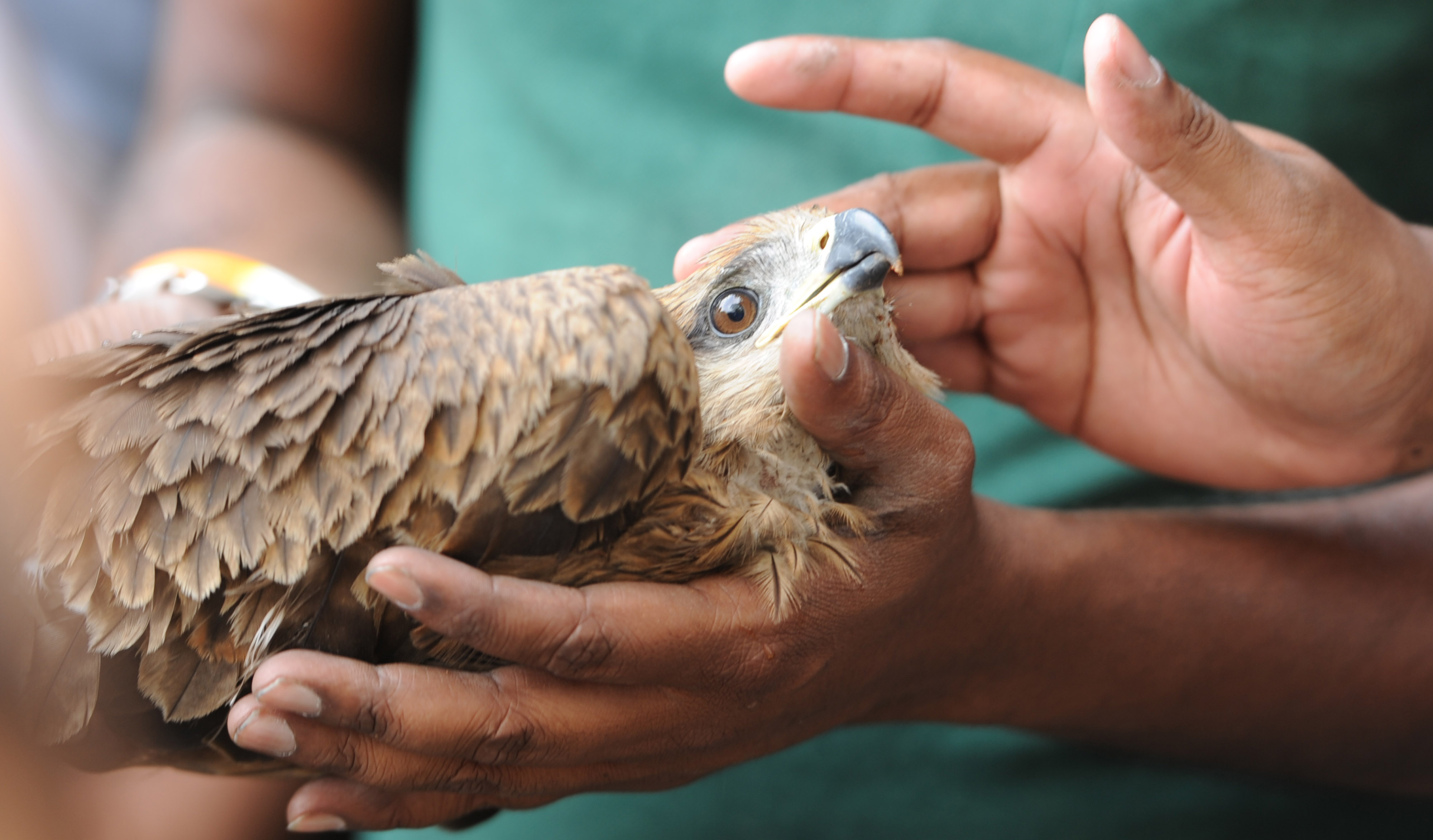
With temperatures soaring in summer, health issues regarding birds is something that can't be ignored. City veterinary hospitals and individual practitioners have seen an increase in the number of emergency cases dealing with birds suffering from heat related ailments. "Most cases are of indigestion and skin related infections but their root cause is heat", said, Dr. Gaurav Pardeshi, vet surgeon at Katraj Animal Rescue Center. However, Pardeshi added, “Exotic birds are not suited to sub tropical temperatures but even indigenous species like kites suffer heat strokes and plummet to the ground.”' Several cases of ‘sub-adult' birds who are not completely trained to fly, also die during summer.

CRUELTY TO BIRDS: 'Savage and sadistic' bird attack in Newquay

Several chickens and ducks have been seriously injured in a "savage and sadistic act of cruelty" in Cornwall, police have said.

One bird was decapitated in the incident in a garden in Hillgrove Street, Newquay.

A number of birds had had their necks twisted in the attack which happened between 21:00 BST on 17 April and 08:30 BST on 18 April.

Two ducks and their 20 incubating eggs were also stolen, police said.